A used car listing can look polished and still get the details wrong. Maybe the seller says it’s a higher trim. Maybe the badge looks right, but the price feels off.
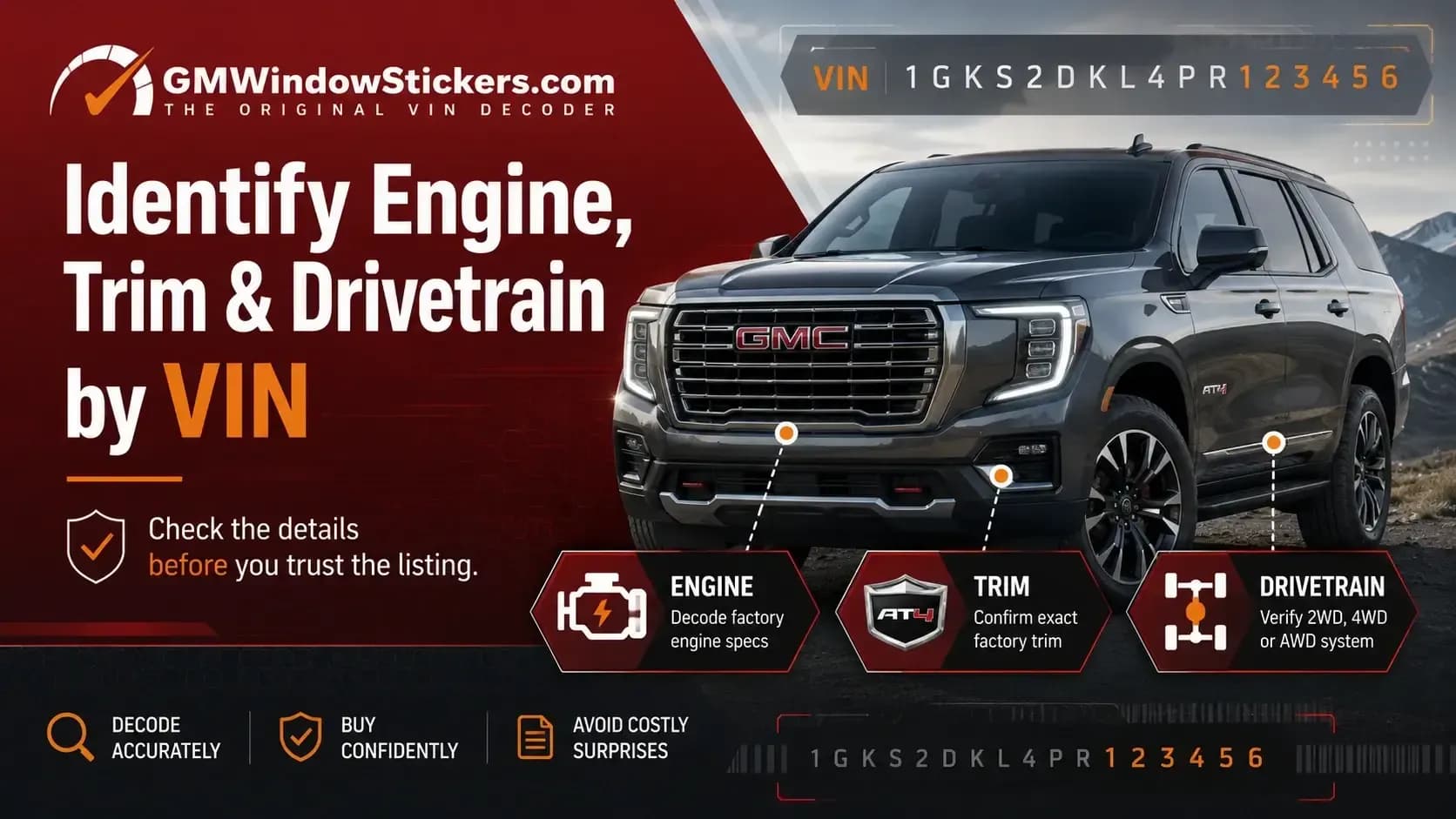
Before you guess, check the VIN. With the right lookup, you can identify the engine by VIN, check trim level by VIN, and confirm drivetrain by VIN number before you spend time, fuel, or money on the wrong vehicle.
Key takeaways:
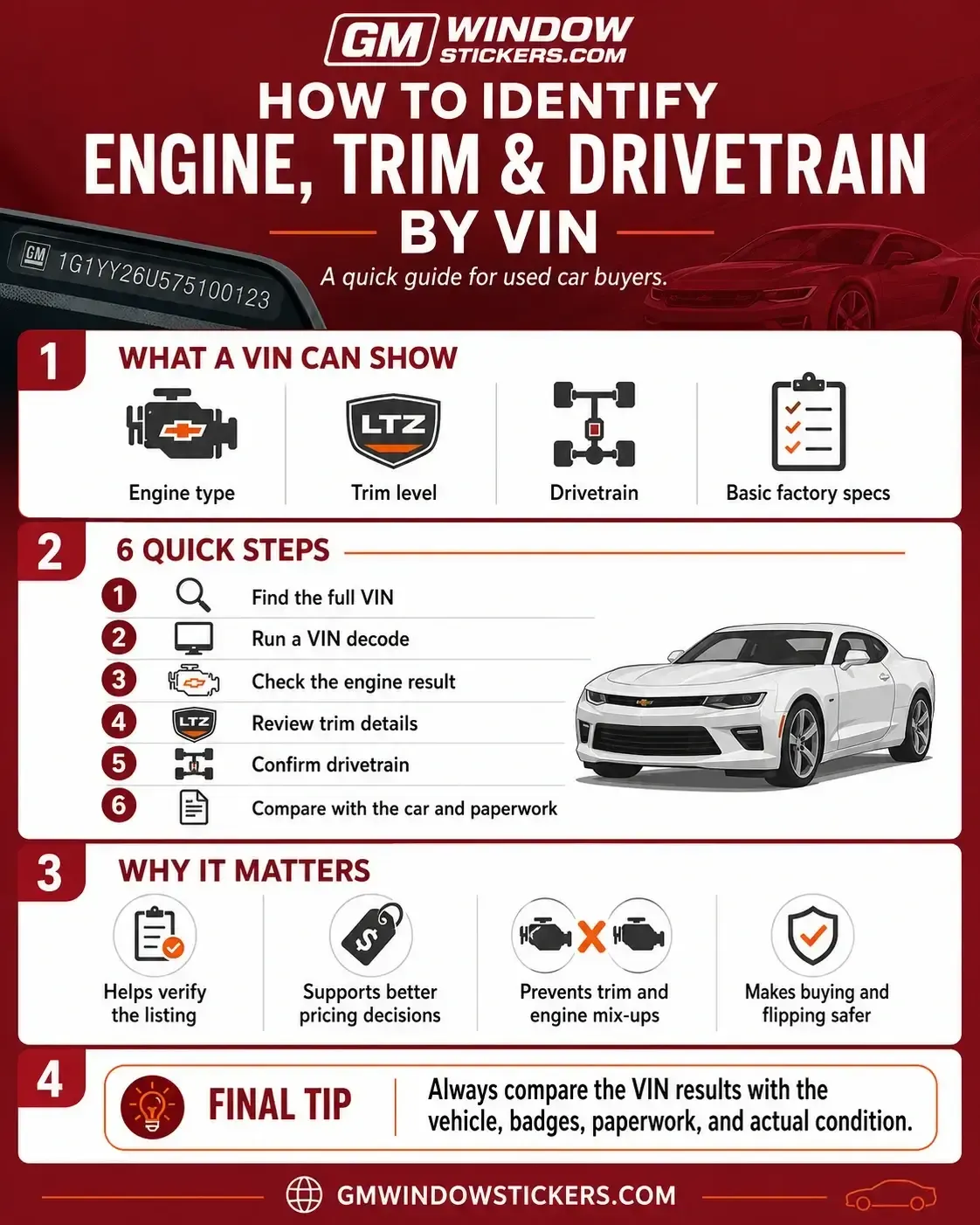
- A VIN can help confirm engine, trim, drivetrain, and key factory specs.
- Engine, trim, and drivetrain affect price, resale value, towing, fuel use, and driving feel.
- Always compare the VIN result with the listing, paperwork, badges, and the actual vehicle.
If you are checking a GM vehicle, start with the GM VIN decoder to review available engine, trim, drivetrain, and factory spec details before trusting the seller’s description.
What Can a VIN Tell You About Engine, Trim, and Drivetrain?
A VIN looks like a boring string of letters and numbers until you actually need it. Then it becomes useful fast.
For modern vehicles, the VIN can point to the car’s identity, including make, model year, body style, engine, trim, drivetrain, and other basic specs. It does not always show every small option, but it gives you a much better starting point than a seller’s guess.
1. Engine Type
A vin decoder engine check may show the engine family, fuel type, cylinder count, or engine configuration when the data is available. This matters because two cars from the same model year can drive very differently.
2. Trim Level
A car trim by VIN check can help confirm whether the car is a base model, sport trim, luxury trim, off-road trim, or another factory version. Trim is where many listings get sloppy.
3. Drivetrain
A drivetrain by vin number check may show whether the vehicle is front-wheel drive, rear-wheel drive, all-wheel drive, or four-wheel drive. That small detail can change how useful the vehicle is in real life.
4. Body Style
The VIN may confirm whether the vehicle is a sedan, coupe, SUV, pickup, hatchback, van, or another body type. It sounds simple, but it helps catch mismatched listings.
5. Model Year and Make
The VIN helps confirm the model year and manufacturer. One wrong year can affect value, features, parts, and even insurance quotes.
6. Basic Factory Specs
A car specs by vin check may include trim, engine, transmission, drivetrain, fuel type, body style, and sometimes price-related details like MSRP or estimated value.
Why Engine, Trim, and Drivetrain Matter More Than People Think?
A lot of buyers focus on mileage and price first. That makes sense. Those numbers are easy to compare.
But here’s the catch: two cars with the same mileage can still be very different buys. One might have the better engine. One might have all-wheel drive. One might be a higher trim with options people actually want.
Small details. Big money.
Engine Affects How the Car Feels
The engine changes power, fuel economy, towing ability, maintenance cost, and sometimes insurance cost. A small engine may save fuel. A larger one may tow better or feel stronger on the highway.
Trim Affects Comfort and Resale
Trim can change seats, wheels, screen size, safety tech, lighting, sound system, and interior materials. Buyers notice those things later, usually after they have already brought the car home.
Drivetrain Affects Real-World Use
All-wheel drive or four-wheel drive can matter in snow, rain, steep roads, job sites, and weekend trips. Front-wheel drive may be fine for a commuter. A truck buyer may need more.
Specs Affect the Asking Price
A stronger engine, higher trim, or better drivetrain can make one vehicle worth more than another, even when both look almost identical in photos.
Wrong Details Can Hide a Bad Comparison
If the listing says one trim but the VIN points to another, slow down. It may be an honest mistake. It may also mean the seller did not check carefully.
Flippers Need the Right Spec
For car flippers, buying the wrong trim can eat into profit. It is like buying parts before checking the build sheet, risky, and usually expensive.
If pricing is part of your research, this guide on checking MSRP and market value by VIN explains how engine, trim, and drivetrain can affect value.
How to Identify Engine by VIN?
If you want to identify the engine by VIN, start with the full VIN and check every character. This sounds painfully basic, but one wrong letter can send the lookup in the wrong direction.
1
Find the Full VIN
Check the lower driver-side windshield, driver-side door jamb, title, registration, or insurance card. Do not use a partial VIN unless the tool specifically supports it.
2
Count the Characters
Most modern vehicles use a 17-character VIN. If the number is shorter, the car may be older, or it may need a classic VIN lookup approach.
3
Run a VIN Engine Code Check
A vin engine code check helps match the VIN with available engine data. Depending on the vehicle, the result may show engine size, fuel type, cylinder count, or engine family.
4
Look for the Engine Code in the Result
A stronger engine, higher trim, or better drivetrain can make one vehicle worth more than another, even when both look almost identical in photos.
5
Compare the Result With the Car
Open the hood. Check the emissions label, engine cover, service records, owner’s manual, and badges. The decoded result should match what you see.
6
Watch for Engine Swaps
Older cars, modified trucks, and enthusiast builds may not have the original engine anymore. In that case, the VIN may show what the vehicle had from the factory, not what is under the hood today.
How to Check Trim Level of a Car by VIN Number
Trim is where used car listings get creative. A seller may say “fully loaded” because the car has leather seats and a sunroof. Nice, but that does not prove the trim.
A vin lookup trim package gives you a cleaner way to check the story.
1
Decode the VIN First
Start with a VIN decoder and look for trim, series, or model variant. Some vehicles show this clearly. Others may need a window sticker or options record.
2
Compare the Trim With the Listing
If the listing says LTZ, Denali, High Country, RS, SS, Premium, Sport, or another trim, make sure the decoded data supports that claim.
3
Look at the Exterior Clues
Wheels, grille design, lighting, badges, bumpers, mirrors, and exhaust tips can hint at trim level. Just do not rely on badges alone. Badges can be replaced.
4
Check the Interior Details
Seats, screen size, steering wheel controls, drive modes, stitching, sound system, and climate controls can all help confirm trim.
5
Review Factory Options
Some features come from the trim. Others come from optional packages. This is where buyers often get mixed up.
6
Ask for Factory Proof When It Matters
If the trim affects the price, ask for a window sticker, options report, build record, or other factory document. A confident seller should understand why.
For a deeper check, this guide on verifying factory options on a used vehicle explains how options and trim can overlap.
What to Check After the VIN Decode
The VIN result is useful, but it is still not the whole car. A clean decode does not mean clean paint. A correct trim does not mean the transmission shifts well.
So, after the lookup, do the real-world checks too.
Check the Engine Bay
Look for engine labels, emissions stickers, service tags, and signs of messy work. A swapped or poorly maintained engine can change the story.
Match the Trim Features
Compare the decoded trim with the seats, wheels, display screen, headlights, badges, and interior materials.
Confirm Drivetrain Clues
Look for AWD or 4WD controls, transfer-case switches, axle details, and drivetrain badges. Badges alone are not enough.
Review the Paperwork
Title, registration, service invoices, warranty documents, and previous sale records can support the VIN result.
Test the Features
If the listing mentions heated seats, tow package, drive modes, cameras, parking sensors, or safety tech, test them. Do not just nod and move on.
Inspect Before Paying
A VIN can confirm identity. It cannot hear a rough idle, feel a hard shift, or smell coolant after a test drive. That part is still on you, or your mechanic.
Before You Believe the Listing
A used car listing is part information, part sales pitch. Even honest sellers can copy the wrong trim or guess the engine size from memory.
The VIN is useful because it gives you something solid to compare against the listing. If the seller says it has one engine or trim, the VIN helps you check whether that story makes sense.
After that, look at the car itself. Compare the decoded engine, trim, drivetrain, and factory specs with the price, condition, service records, and paperwork. The best buying decision usually comes from both sides: the data and the real vehicle in front of you.
For GM vehicles, the GM options lookup can also help when you need to confirm factory packages, installed options, or equipment details before deciding whether the price is fair.
Frequently Asked Questions
How can I identify the engine by VIN?
You can identify an engine by VIN by running the full VIN through a decoder that includes engine data. Depending on the vehicle, the result may show engine size, engine type, fuel type, cylinder count, or engine family.
How do I check trim level by VIN?
To check trim level by VIN, decode the VIN first and look for the trim, series, or model variant in the result. Then compare it with the badges, wheels, interior features, and factory paperwork.
Can I find the drivetrain by VIN number?
Yes, a drivetrain by vin number check may show whether the vehicle is FWD, RWD, AWD, or 4WD. If the result is unclear, compare it with the vehicle’s badges, controls, underbody parts, and service records.
How do I find engine size from VIN?
If you want to know how to find engine size from vin, use a VIN decoder that reads engine information. Some decoders may show displacement, cylinder count, fuel type, or engine family.
How do I find out what engine is in my car by VIN?
For how to find out what engine is in my car by vin, start with the full VIN. After decoding it, check the engine bay labels, emissions sticker, owner documents, and service records to make sure the result matches the actual car.
How do I check the trim level of a car by VIN number?
For how to check trim level of a car by vin number, use the VIN to find the trim or series first. Then look at the vehicle’s seats, wheels, badges, screen size, lighting, and factory documents to confirm it.
How do I read the VIN number for engine code?
For how to read the Vin number for engine code, check the vehicle description section of the VIN. On many modern 17-character VINs, this is usually around characters 4–8, but the exact engine-code position can change by manufacturer and model year.
What is a VIN engine code?
A VIN engine code is the part of the VIN data that helps identify the engine type or engine family. It is useful for checking whether the engine shown in the listing matches the vehicle’s original build.
Does a VIN show every trim package?
Not always. A VIN may show the trim or series, but some option packages may not appear in a basic decode. For full package details, you may need a window sticker, build sheet, or options report.
Can a VIN be wrong about the engine?
The VIN usually shows the vehicle’s original factory engine. If the engine has been swapped or modified, the VIN may no longer match what is under the hood today.