Nice wheels, leather seats, and a shiny badge can make a used car look well equipped. The problem? None of those things proves how it left the factory.
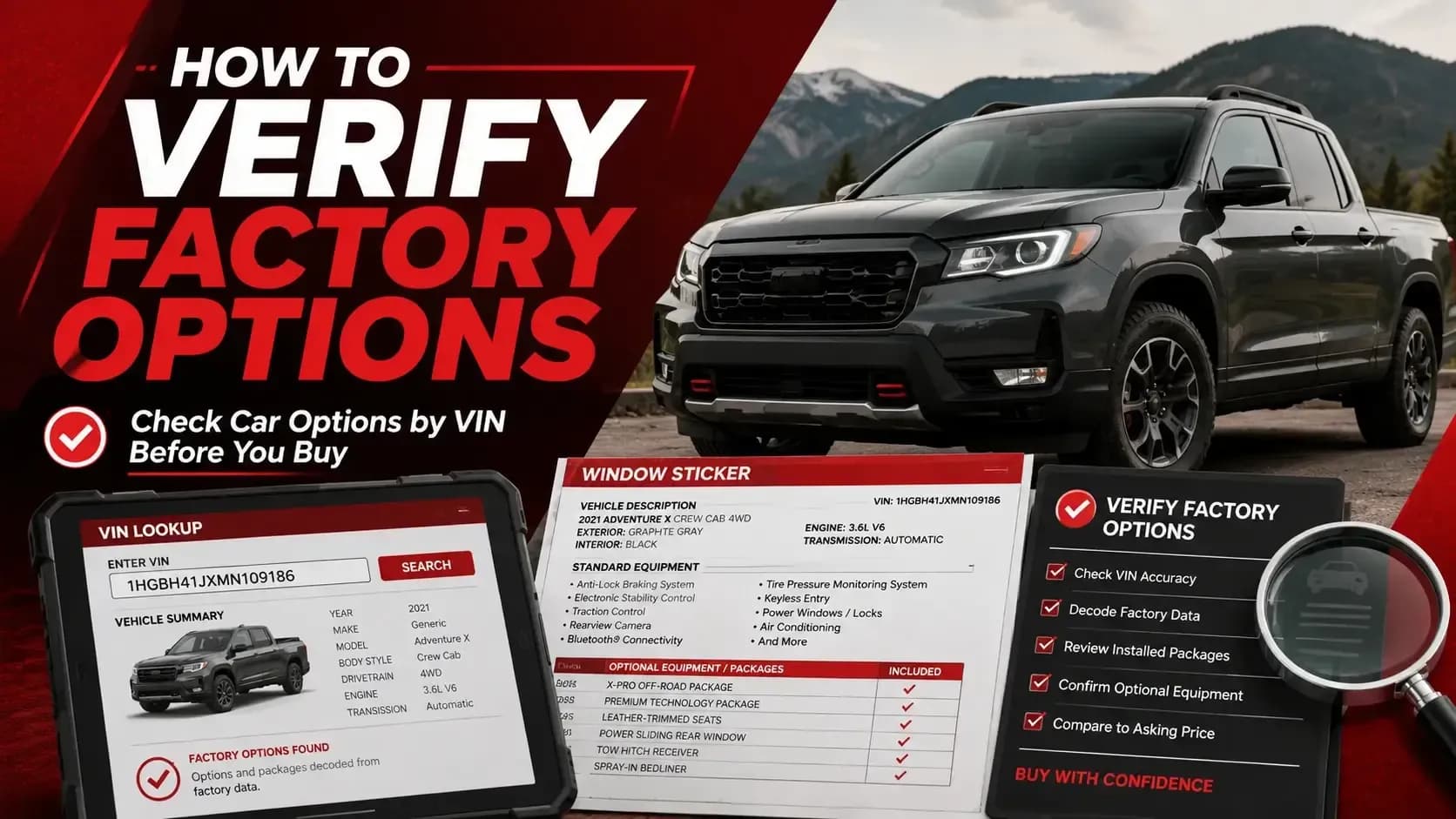
A check car option by VIN search helps you review original packages, equipment, trim details, and factory upgrades before trusting the listing or the badge on the trunk.
Key takeaways:
- A VIN can help confirm original options, packages, and trim-related equipment.
- One visible feature does not prove that the vehicle has the full factory package.
- The strongest check combines VIN data, factory documents, paperwork, and the actual car.
For a GM vehicle, begin with the GM options lookup to review available factory equipment and package details tied to the VIN.
What Can a VIN Options Lookup Actually Show?
A VIN options lookup connects the vehicle identification number with available factory data. Depending on the model year and record coverage, the result may show the trim, drivetrain, paint, interior, wheels, packages, safety equipment, towing features, and other original details.
It is not a magic list of everything that has ever been bolted onto the car. Aftermarket parts usually will not appear. Dealer-installed accessories may also need separate paperwork.
Still, it gives you a far better starting point than “the seller said so.”
1. Trim and Series
The VIN data may help confirm whether the car began life as a base model, luxury trim, sport version, off-road model, or another series.
2. Factory Packages
A vin lookup factory options result may show convenience, towing, technology, appearance, safety, or performance packages.
3. Mechanical Equipment
Engine, transmission, axle, drivetrain, suspension, cooling, and towing-related details may appear when the data is available.
4. Interior and Exterior Details
Original paint, upholstery, wheel design, audio equipment, lighting, and cabin features may also be listed.
How to Verify Factory Options by VIN
To verify factory options by VIN, start with the number itself, then work through the evidence around it. Do not stop after seeing one familiar package name.
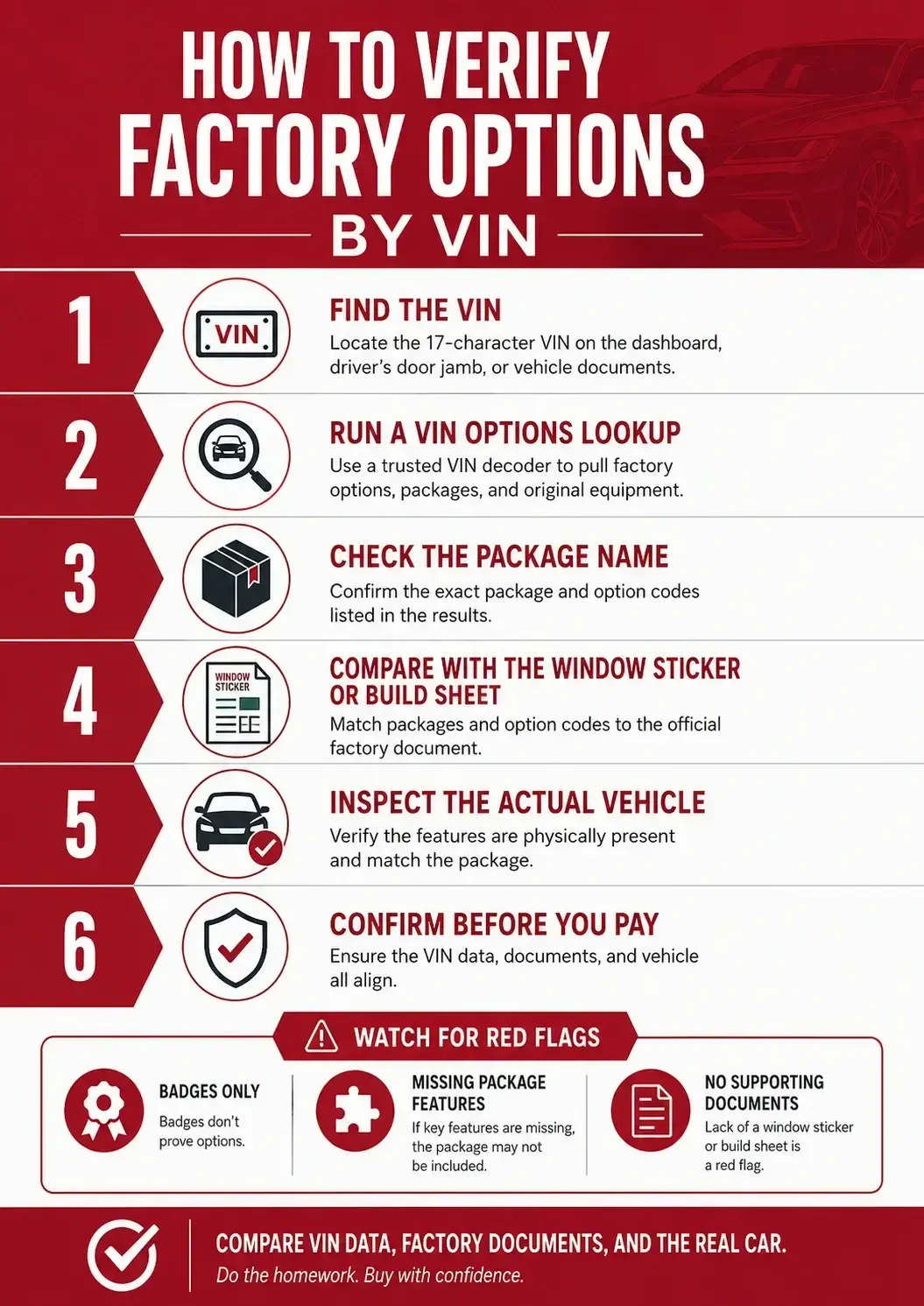
1. Copy the Full VIN From the Vehicle
Use the dashboard plate or driver-side door label when possible. Seller messages and listings can contain typing errors.
2. Run the VIN Through an Options Decoder
Use a vehicle options decoder that provides factory equipment or package information. Check that the returned year, model, and trim match the car.
3. Read the Option List Carefully
Look for the actual package name and the major equipment included with it. Pay attention to drivetrain, towing, suspension, wheels, audio, safety, and interior features.
4. Compare the Results With the Listing
Read the advertisement again. Does “off-road package” appear in the factory information, or is the claim based on tires and a badge?
5. Inspect the Vehicle Feature by Feature
Sit in the car. Test the cameras, heated seats, drive modes, audio system, power equipment, and towing controls. A claimed feature that does not exist or does not work, still affects the deal.
6. Ask for Factory Documents
A window sticker, build sheet, original invoice, or dealer paperwork may settle details that a basic VIN result leaves unclear.
Why Factory Options Matter on a Used Car
Options sound like small extras until they affect the price. Then they stop feeling small.
Two vehicles can share the same year, model, mileage, and body color yet be worth noticeably different amounts. One may have the right drivetrain and towing equipment. The other may simply wear similar wheels.
1. Packages Can Change Real Capability
A factory tow package may include wiring, cooling, axle gearing, brake controls, or other equipment. A hitch alone does not make the same package.
2. Options Help Explain Price Differences
Premium audio, driver-assistance equipment, special wheels, upgraded seats, and off-road hardware can push the original price higher.
3. Desirable Equipment Can Help Resale
Buyers often search for specific combinations. Four-wheel drive, towing equipment, ventilated seats, or a performance package can make a vehicle easier to resell.
4. Missing Equipment Weakens the Seller’s Claim
If the listing charges a premium for a package that the vehicle never had, your negotiation changes rather quickly.
5. Flippers Need Accurate Comparisons
A flipper who compares a base trim with a loaded version may overpay before the car even reaches the driveway.
6. Originality Matters to Enthusiasts
Factory equipment usually carries more weight with collectors than a collection of unrelated parts added later.
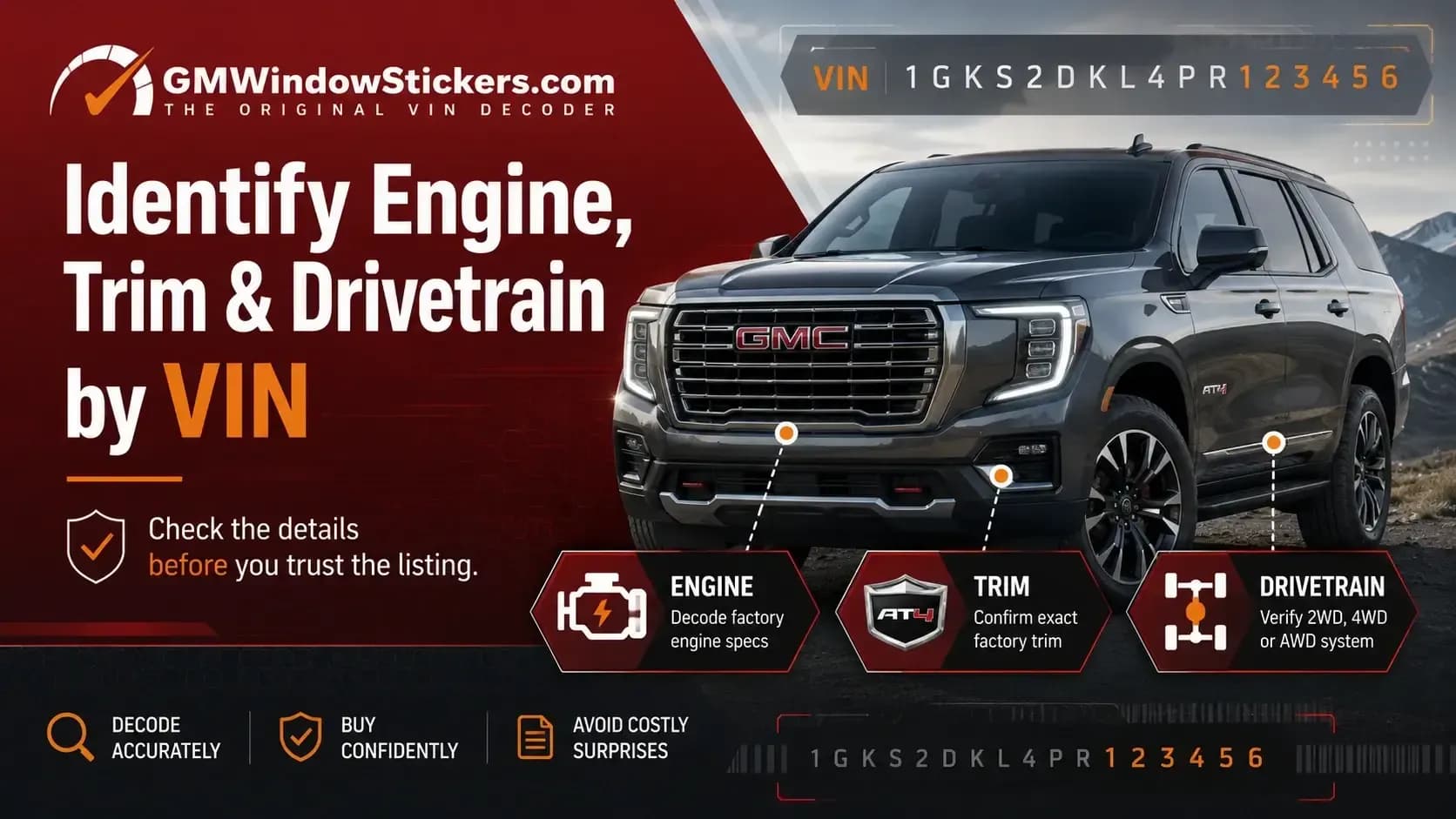
Engine, trim, and drivetrain details often overlap with package claims. This guide on how to identify engine, trim, and drivetrain by VIN can help when the listing and decoded details do not quite agree.
How to Check Car Packages Without Getting Fooled by One Feature
A package is a group of features. That sounds obvious, yet used listings often treat one item as proof of the entire bundle.
A sunroof does not automatically prove a luxury package. A receiver hitch does not prove a factory tow package. Big wheels certainly do not prove a higher trim.
1. Find the Official Package Name
Ask the seller which package the vehicle supposedly has. “Fully loaded” is not a package name.
2. Check the Package Contents
Packages change by model year and trim. Find out what was included on that exact version of the vehicle.
3. Look for the Full Feature Set
If the package should include six major features and the car has only two, something needs explaining.
4. Confirm It With Factory Records
Use VIN data, a window sticker, or a build sheet before treating the package as genuine.
This is also where factory documents become useful. The guide to window sticker vs build sheet explains which document is better for package prices and which one is better for option codes.
Factory, Dealer-Installed, or Aftermarket? They Are Not the Same
A modification can be useful and still not be factory equipment. There is nothing wrong with a quality aftermarket upgrade, but buyers should know what they are paying for.
1. Factory-Installed Equipment
This equipment was included during production and should usually match factory records tied to the VIN.
2. Factory Packages
These are grouped options created by the manufacturer, often with a package name or option code.
3. Dealer-Installed Accessories
Running boards, bed covers, wheel locks, protection packages, and other accessories may have been added by the dealer.
4. Aftermarket Parts
Wheels, suspension kits, stereos, lights, exhaust systems, and body parts may have been installed by a previous owner.
5. Replacement Parts
Accident repairs or normal wear may lead to factory parts being replaced with different versions.
6. Cosmetic Up-Badging
A badge, grille, wheel set, or steering-wheel emblem can make a lower trim resemble a more expensive model without changing what it truly is.
This distinction matters because a seller may call every added part an “upgrade.” Technically, perhaps. Factory-original? That is a different question.
How Do I Know If My Car Has Factory Upgrades?
The answer usually comes from several pieces of evidence, not one dramatic clue.
1
Check the VIN Data
Run a VIN options lookup and note the trim, packages, and major equipment shown.
2
Review the Window Sticker
The sticker may list paid options, package names, original prices, and standard equipment.
3
Read the Build Sheet
A build sheet may offer deeper configuration details or option codes that support the original specification.
4
Look at the Vehicle
Compare the documents with the wheels, seats, controls, drivetrain hardware, screens, cameras, and badges.
5
Review Old Paperwork
Original sales documents, service invoices, and dealer records may explain accessories added after production.
6
Check Part Labels When Needed
On enthusiast or high-value vehicles, part numbers and production labels may help confirm whether major equipment is original.
Before You Pay Extra for the Options
Factory options can make a car more capable, comfortable, and valuable. They can also make a listing look better than the vehicle deserves.
Start with the VIN. Check the packages. Compare the data with the physical car and supporting documents. If something does not line up, ask about it before discussing price—not after handing over the money.
For deeper factory configuration details, a GM build sheet by VIN can help confirm option codes, original equipment, and build information when the basic options list is not enough.
Frequently Asked Questions
How can I check car options by VIN?
You can check car options by VIN by entering the full VIN into a lookup tool that provides available factory equipment, trim, and package details. Compare the result with the car and its documents.
What is a VIN options lookup?
A VIN options lookup uses the vehicle identification number to find available information about original packages, equipment, trim details, and factory upgrades.
Can I verify factory options by VIN alone?
You can often verify factory options by VIN, but a VIN lookup may not show every detail. A window sticker or build sheet can provide stronger support when exact packages matter.
What is a vehicle options decoder?
A vehicle options decoder is a tool that reads the VIN and returns available factory equipment or package information for that vehicle.
How do I find out what packages my car has by VIN?
Run the VIN through an options lookup, note the package names, and compare them with the window sticker, build sheet, and features installed on the car.
How do I know if my car has factory upgrades?
Factory upgrades should appear in factory-related VIN data, the original window sticker, a build sheet, or sales paperwork. The physical equipment should also match those records.
How can I verify a car is not a clone or up-badged?
To check whether a car is cloned or up-badged, compare its VIN-decoded trim, engine, drivetrain, options, badges, interior, and factory documents. A badge that conflicts with the original build is a warning sign, not proof by itself.
Do aftermarket options appear in a VIN lookup?
Usually not. VIN-based records focus on factory equipment. Aftermarket additions generally need receipts, service records, or a physical inspection.
Does a window sticker show all factory options?
A window sticker usually lists the standard equipment and paid options shown when the vehicle was new. Coverage can vary by vehicle and available records.
Should I verify factory options before buying?
Yes. Confirming the options can help you avoid paying for a package the vehicle does not have and make your price comparison more accurate.