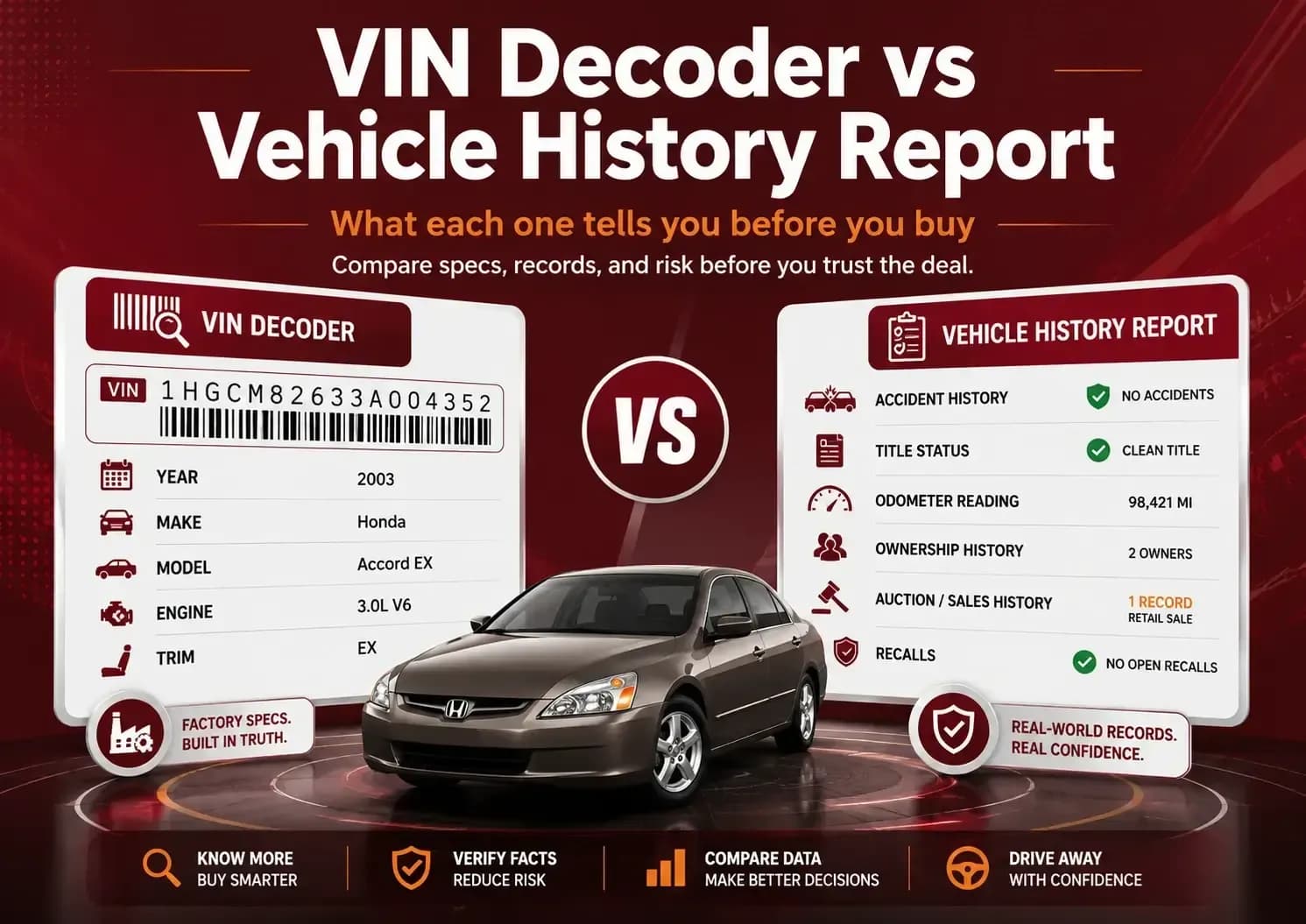
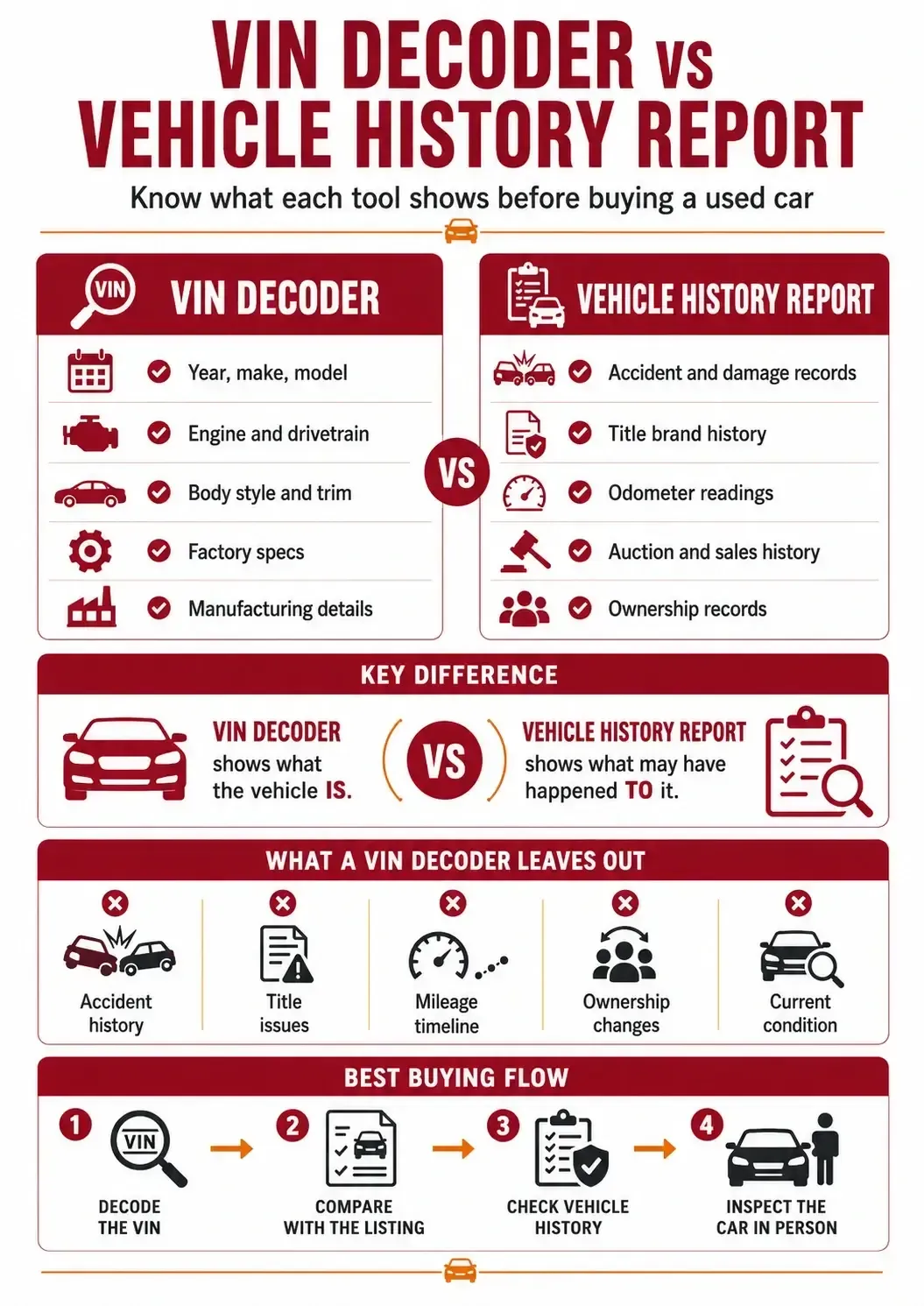
A VIN decoder vs vehicle history report comparison sounds a bit technical at first, but it comes down to a simple idea: one tells you what the car is, and the other helps tell you what the car has been through.
That’s a big difference.
A VIN decoder can confirm basics like year, make, model, engine, trim, body style, and sometimes factory specs. A vehicle history report looks at records tied to that vehicle over time, such as title brands, mileage readings, accident records, sales history, auctions, and ownership changes.
Key takeaways:
- A VIN decoder helps confirm the vehicle’s identity and specs.
- A vehicle history report gives more background on the car’s past.
- Used car buyers should often use both before making a serious decision.
If you are checking a GM vehicle, start with the GM VIN decoder to confirm the basics first. If the vehicle still looks promising, then it makes sense to check deeper records.
Why Do People Confuse These Two?
Because both start with the VIN.
That little 17-character code sits on the dashboard, door jamb, title, registration, and insurance documents. You type it into a tool, and suddenly you expect answers. Fair enough.
But the answers are different depending on the tool.
A VIN decoder reads the code itself. It is like checking the vehicle’s build identity. It can tell you what the vehicle was meant to be when it left the factory.
A history report checks records connected to that VIN. It is more like looking through the vehicle’s paper trail. Not every page of that trail is always available, but the available records can still tell you plenty.
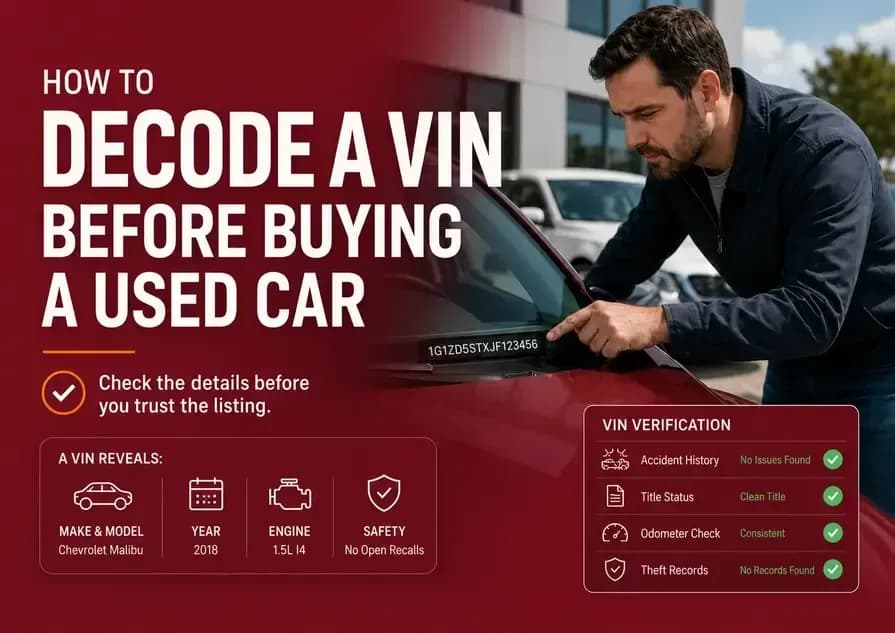
If you want to understand the first step before this comparison, this guide on how to decode a VIN before buying a used car explains how buyers can use the VIN before a test drive.
What Does a VIN Decoder Show?
A VIN decoder for used cars is usually the first tool you use when a listing looks interesting. It helps answer a basic but important question: is this vehicle really what the seller says it is?
Here’s what a VIN decoder can usually help confirm.
Year, Make, and Model
This is the starting point. If the listing says the car is a 2020 model, but the VIN points to a different year, that needs an explanation.
Body Style and Vehicle Type
A decoder may show whether the vehicle is a sedan, coupe, SUV, truck, van, or another body type. It sounds basic, but listing errors happen more often than buyers think.
Engine and Drivetrain
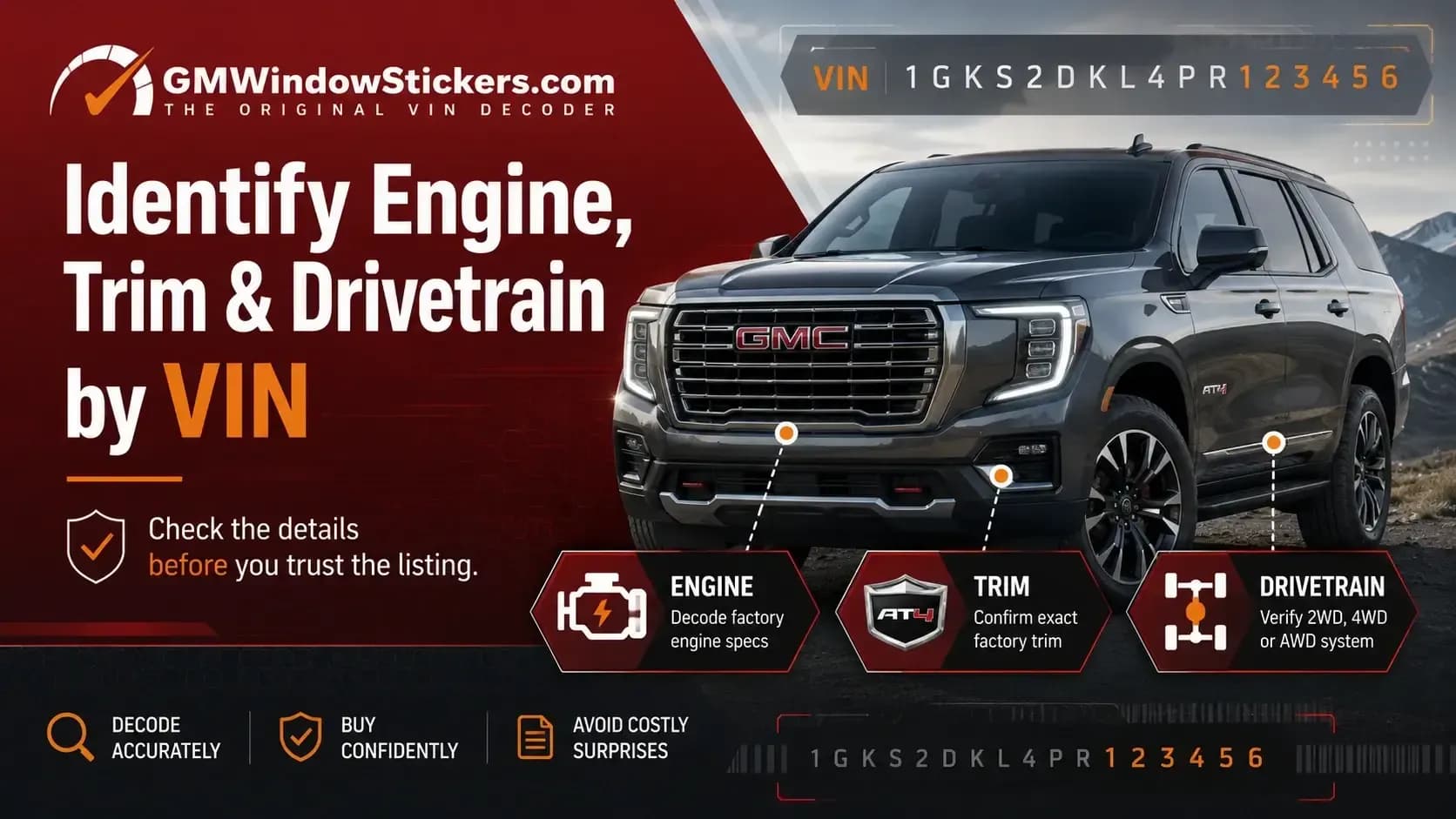
Many decoders can show engine size, fuel type, transmission, or drivetrain details when the data is available. For buyers, this matters for fuel cost, towing, insurance, and resale value.
Manufacturing Details
The VIN can point to the manufacturer, assembly plant, country, and production sequence. Not exciting dinner-table stuff, sure, but useful when checking a vehicle’s identity.
Trim or Series Information
Some VINs can help identify trim, series, or vehicle line. This is helpful when sellers use vague words like “loaded” without showing what the car actually has.
Basic Factory Specs
A decoder may show details like doors, restraint system, brake type, seating, and other basic specs. It will not tell you everything, but it gives you a clean starting point.
What Is Included in a Vehicle History Report?
Now we move from identity to history. A car history report is meant to show records tied to the vehicle after it entered the real world.
And the real world can be messy. Cars get sold, moved, repaired, damaged, financed, auctioned, registered, and sometimes repaired quietly in someone’s garage.
So, what is included in a vehicle history report?
Title Brand Records
A report may show title brands such as salvage, rebuilt, flood, fire, junk, hail, or lemon when records are available.
Accident and Damage Records
Some reports include accident, damage, structural, or insurance-related records. Not every repair gets reported, but available records can still change how you view the car.
Odometer Readings
Mileage records help you see whether the odometer story makes sense. A smooth timeline is good. Strange drops or gaps deserve a closer look.
Sales and Listing History
A report may show previous sale listings, price changes, and marketplace activity. For car flippers, this section can be gold because it shows how the car moved through the market.
Auction Records
Auction data may include sale dates, photos, condition notes, or seller comments when available. That can tell you how the vehicle looked before it reached the current seller.
Ownership and Usage Clues
Some reports may show ownership count, state history, registration activity, and possible usage type, such as personal, fleet, rental, or commercial.
Lien or Loan Records
When available, lien records may suggest that a lender or financial party still has an interest in the vehicle.
Recall or Service Context
Some reports may include recall or service-related information. For open recalls, it is still smart to verify through official recall sources or a dealer.
A history report is not a crystal ball. It is a record check. That distinction matters.
The Real Difference Between VIN Decoder and Vehicle History Report
The difference between VIN decoder and vehicle history report becomes easier when you split the question into two parts.
A VIN decoder asks: “What is this vehicle?”
A vehicle history report asks: “What records are connected to this vehicle?”
| Buyer Question | VIN Decoder | Vehicle History Report |
|---|---|---|
| What year, make, and model is it? | Yes | Often included |
| What engine or body type does it have? | Often | Sometimes |
| Was it in an accident? | No | May show records |
| Does it have a branded title? | No | May show records |
| Are mileage records available? | No | Often |
| Has it been sold at auction? | No | May show records |
| Is it enough before buying? | Not by itself | Not by itself |
← Scroll horizontally to see more →
That last part is important. Neither tool should be treated as the whole answer.
A VIN decoder can be right and still not tell you the car’s past. A history report can be helpful and still miss private repairs or unreported damage. That is not a flaw in the idea; it is just how vehicle records work.
Is a Free VIN Decoder the Same as a Vehicle History Report?
No. Is a free VIN decoder the same as a vehicle history report? Usually not.
A free VIN decoder helps you decide whether the vehicle is worth more attention. A history report helps you decide whether the vehicle is worth more trust.
A Free VIN decoder Screens the Car
Use it early when you are looking through several listings. It helps you remove obvious mismatches.
A History Report Adds Context
It may show title, mileage, accident, sales, auction, ownership, and lien records when available.
A Decoder Is Good Before the Test Drive
If the decoded details do not match the ad, you might save yourself a wasted trip.
A Report Is Better Before Payment
Once you are serious, deeper records are worth checking before money changes hands.
Think of the VIN decoder as the first handshake. The history report is the longer conversation.
What Information Does a VIN Decoder Leave Out?
A decoder can be useful and still leave out the things buyers worry about most. That sounds odd, but it makes sense once you know its job.
Here is what information does a VIN decoder leave out most of the time.
Accident History
Accidents are not encoded in the VIN. They may appear in a vehicle history report if records exist.
Title Problems
Salvage, rebuilt, flood, junk, or lemon title brands usually require history data.
Mileage Timeline
A decoder may identify the car, but it will not show how mileage changed over the years.
Ownership Changes
Previous owners, registration states, and usage type usually come from history records.
Auction Photos and Notes
Auction activity is not part of the VIN structure. It may appear in a history report.
Current Condition
No online tool can fully show how the car drives, smells, sounds, or feels on the road.
That last point is not very technical, but it is real. A used car is not just data. It is metal, rubber, fluids, electronics, and someone else’s habits.
Can You Get a Full Vehicle History Report With Just a VIN?
Yes, in many cases. Can you get a full vehicle history report with just a VIN? Usually, the VIN is the main thing needed to search for available records.
Still, “full” depends on what records exist.
Newer Vehicles Often Have More Data
Recent cars tend to have more digital records from dealers, auctions, insurers, and registration systems.
Older Vehicles May Have Gaps
Older cars and classics can have thinner records, especially when old paperwork was never digitized.
Private Repairs May Stay Private
If a repair was handled without insurance or formal reporting, it may not appear.
Imported or Rebuilt Vehicles Need Extra Care
Cars that crossed markets, changed titles, or had major repair work may need deeper checking.
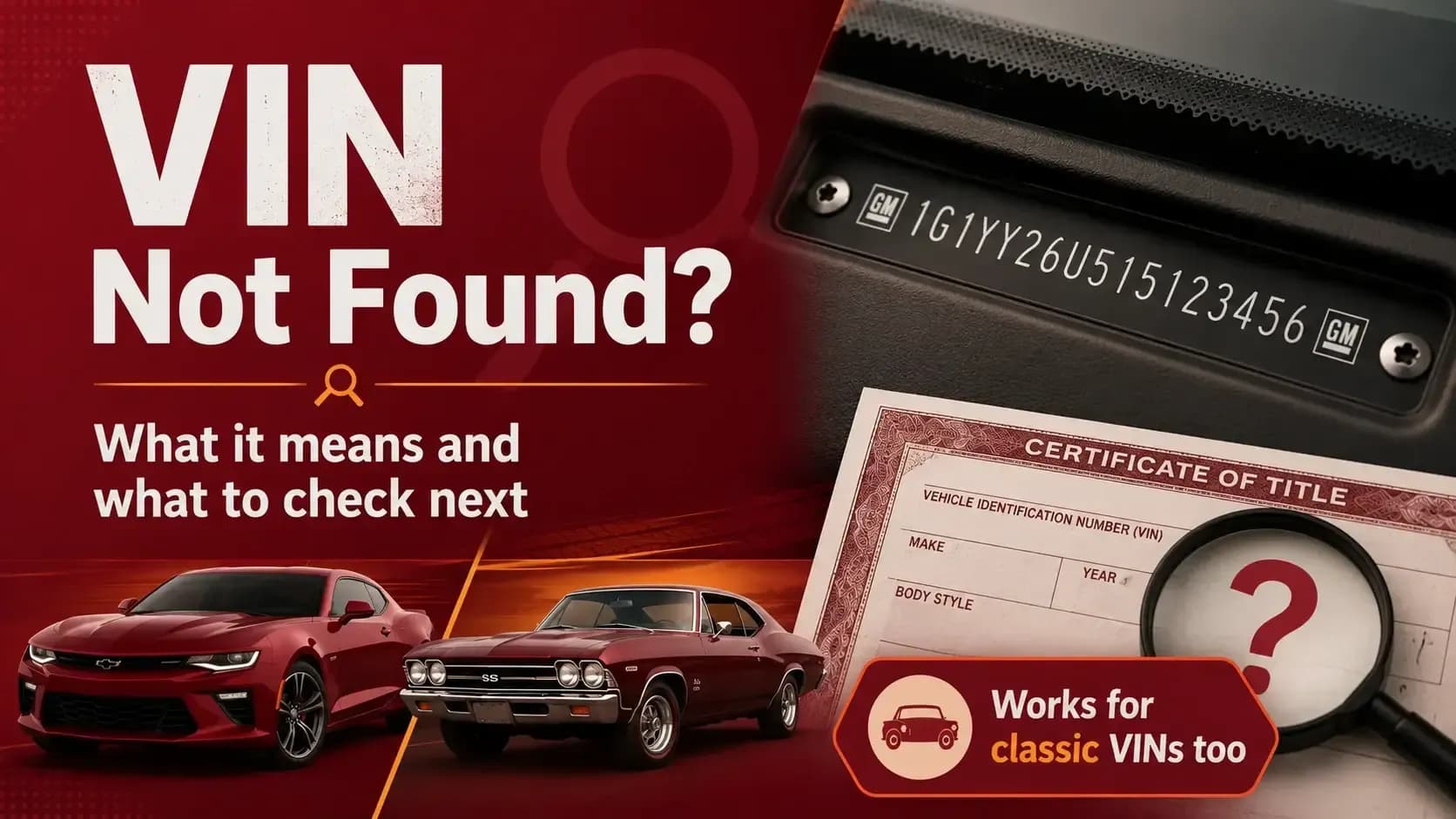
If the VIN does not return results, do not assume the worst right away. This guide on why a VIN may not be found explains common reasons, from typing mistakes to older VIN formats.
How to Tell If a VIN Report Is Real or Fake?
A weak or suspicious report can make a risky car look better than it is. Buyers focus on the car, which makes sense, but the paperwork deserves attention too.
Here is how to tell if a VIN report is real or fake. A real report supports your decision. It should not make the decision for you.
1
Match the VIN Carefully
The VIN on the report should match the dashboard, door jamb, title, registration, and seller documents exactly.
2
Review the Timeline
Dates, mileage entries, ownership changes, and sales activity should follow a logical order.
3
Look for Clear Sections
A real report should organize records clearly. Vague claims with no structure should make you cautious.
4
Compare With Seller Records
Ask for title, service invoices, inspection records, and repair receipts. The seller’s paperwork should not contradict the report.
5
Watch for Strange Mileage
Mileage should generally move upward over time. Sudden drops, odd gaps, or repeated identical readings need attention.
6
Inspect the Car Anyway
A report can miss things. Look at the vehicle in person and, if possible, have a mechanic inspect it.
So, Which One Should You Use First?
Start with the VIN decoder.
It is quick, simple, and useful when you are still sorting through listings. If the decoded details do not match the ad, that alone may be enough to walk away or ask better questions.
Then use a vehicle history report when the car passes the first check and you are seriously considering it.
For a GM vehicle, you can move from a basic decode to a GM vehicle history report when you need title, accident, mileage, sales, auction, or ownership records before making a decision.
Frequently Asked Questions
What is the main difference between a VIN decoder and a vehicle history report?
A VIN decoder identifies what the vehicle is. A vehicle history report shows available records about what may have happened to it.
Does a free VIN decoder show accident history?
Usually no. A free decoder focuses on identity and specs. Accident records are usually part of a vehicle history report when available.
Is a VIN decoder enough before buying a used car?
It is a good starting point, but it is not enough for a serious purchase. Use a history report and inspect the vehicle in person.
Can a VIN decoder show engine and trim?
Yes, in many cases. A decoder may show engine, trim, drivetrain, body style, and other specs when available.
What is included in a car history report?
A report may include title brands, accident records, mileage readings, sales history, auction records, ownership details, liens, and recall context.
Can a history report be wrong?
It can be incomplete. Reports depend on available records, and not every accident, repair, or ownership event is reported.
Should I pay for a vehicle history report?
If you are serious about buying the car, yes. The report may reveal records that affect price, safety, resale value, or negotiation.
Can I get a vehicle history report with only a VIN?
Usually yes. The VIN is commonly used to search available history records connected to that specific vehicle.