A used car price can look fair at first. Then you compare it with another car from the same year, and the numbers start acting strange. Same model. Similar mileage. Clean photos. Yet one costs thousands more.
The VIN can help explain part of that gap.
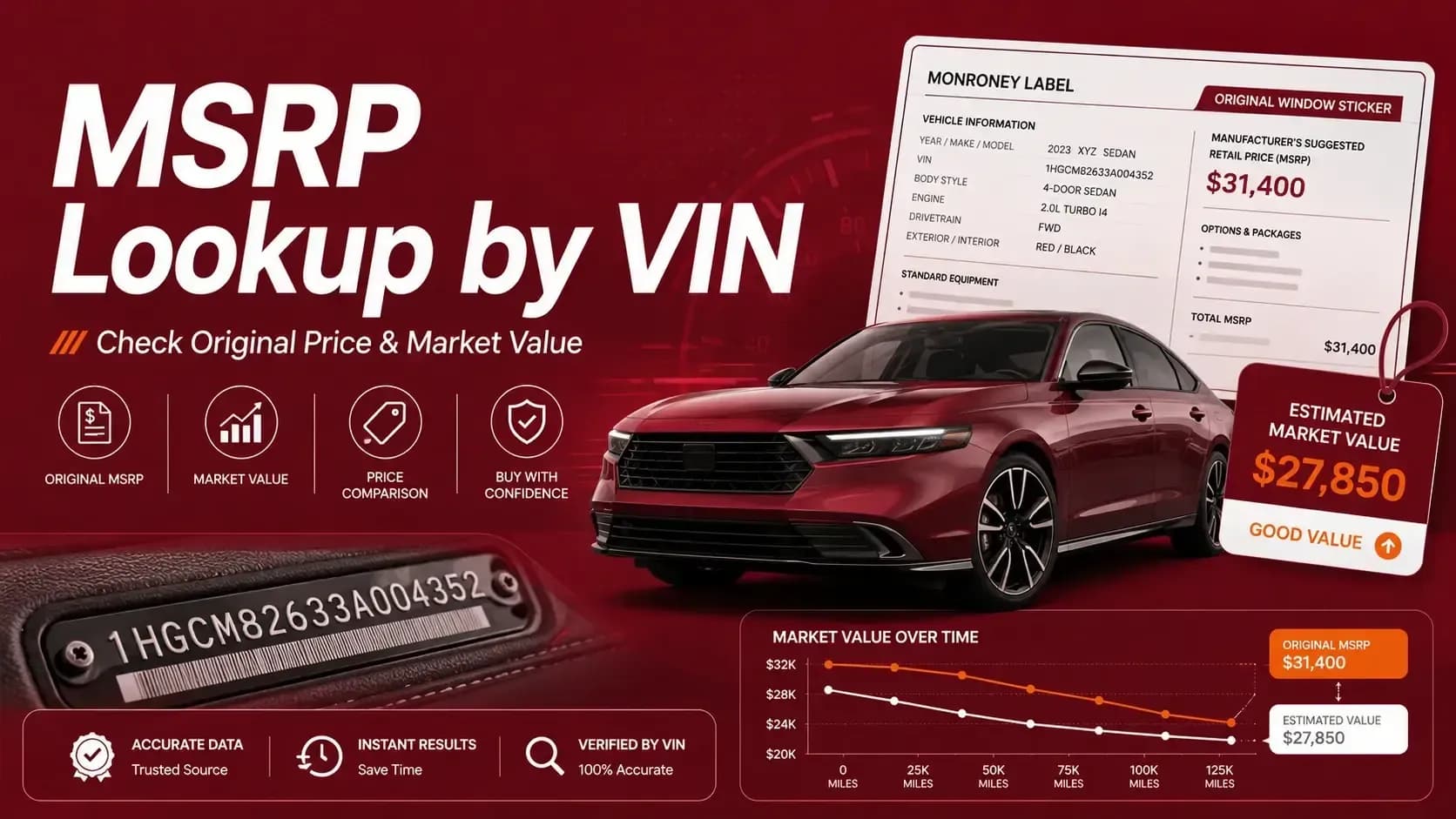
An msrp lookup by vin helps you check the vehicle’s original manufacturer suggested retail price. A check car value by vin helps you understand what the car may be worth now. Those two numbers are not the same, but together they give you better pricing context before you buy, sell, or negotiate.
Key takeaways:
- MSRP shows how the vehicle was priced when new.
- Estimated market value shows what the vehicle may be worth today.
- A VIN helps connect price with trim, engine, options, and vehicle identity.
If you are checking a GM vehicle, you can check MSRP and estimated market value by VIN to review available specs, original MSRP, and value details before comparing prices.
First, What Is MSRP?
MSRP stands for Manufacturer’s Suggested Retail Price. It is the price the automaker suggested when the vehicle was new.
Think of it as the number printed on the original window sticker before dealer discounts, taxes, title fees, trade-ins, and negotiations started moving the price around.
Simple enough, right? Mostly.
The tricky part is that two vehicles with the same model name can have very different original prices. One may be a base trim. Another may have a bigger engine, all-wheel drive, premium wheels, towing equipment, a nicer interior, or extra safety technology.
That is why original msrp by vin can be useful. It helps you understand how that exact vehicle was priced when it was new, not just what similar cars seem to cost now.
Why Check MSRP and Market Value by VIN?
Price is emotional. Buyers do not want to overpay. Sellers do not want to leave money on the table. Car flippers need enough room for repairs, transport, detailing, fees, and still, hopefully, profit.
A VIN gives you a cleaner way to read the numbers.
The Listing Price May Not Tell the Full Story
A seller may price the car based on mileage and appearance, but the VIN can reveal trim, engine, drivetrain, and original pricing context.
Similar Cars Can Have Different Equipment
Two trucks may look almost the same in photos. One may have a better towing package, upgraded interior, or higher-value drivetrain.
MSRP Shows the Vehicle’s Starting Point
The original price does not decide today’s value, but it helps explain why one version may be worth more than another.
Market Value Helps You Judge the Current Deal
A vin market value check helps you compare the asking price with a current estimated value range.
Buyers Can Negotiate With Better Context
When you know the original price and current value, you can ask better questions instead of just asking, “Can you do better?”
Sellers Can Price More Carefully
For sellers and flippers, pricing too high can slow the sale. Pricing too low can cut profit. VIN-based value checks help narrow that gap.
MSRP vs Market Value by VIN
Here is where people often get mixed up. MSRP and market value are connected, but they answer different questions.
MSRP vs market value by VIN works like this:
| Pricing Point | What It Means | Why It Matters |
|---|---|---|
| Original MSRP | Suggested retail price when new | Shows the factory price position |
| Estimated Market Value | Current value estimate | Helps judge today’s asking price |
| Listing Price | What the seller wants | May be fair, high, or low |
| Final Sale Price | What buyer and seller agree on | Depends on condition and negotiation |
← Scroll horizontally to see more →
MSRP tells you where the vehicle started. Market value tells you where it may stand now.
And that gap can surprise people. A clean truck with the right package may hold its price better than a plain version parked next to it. A luxury sedan that looked expensive on the window sticker can lose value faster than expected. The used car market is not always fair, but once you compare the right numbers, it becomes easier to understand.
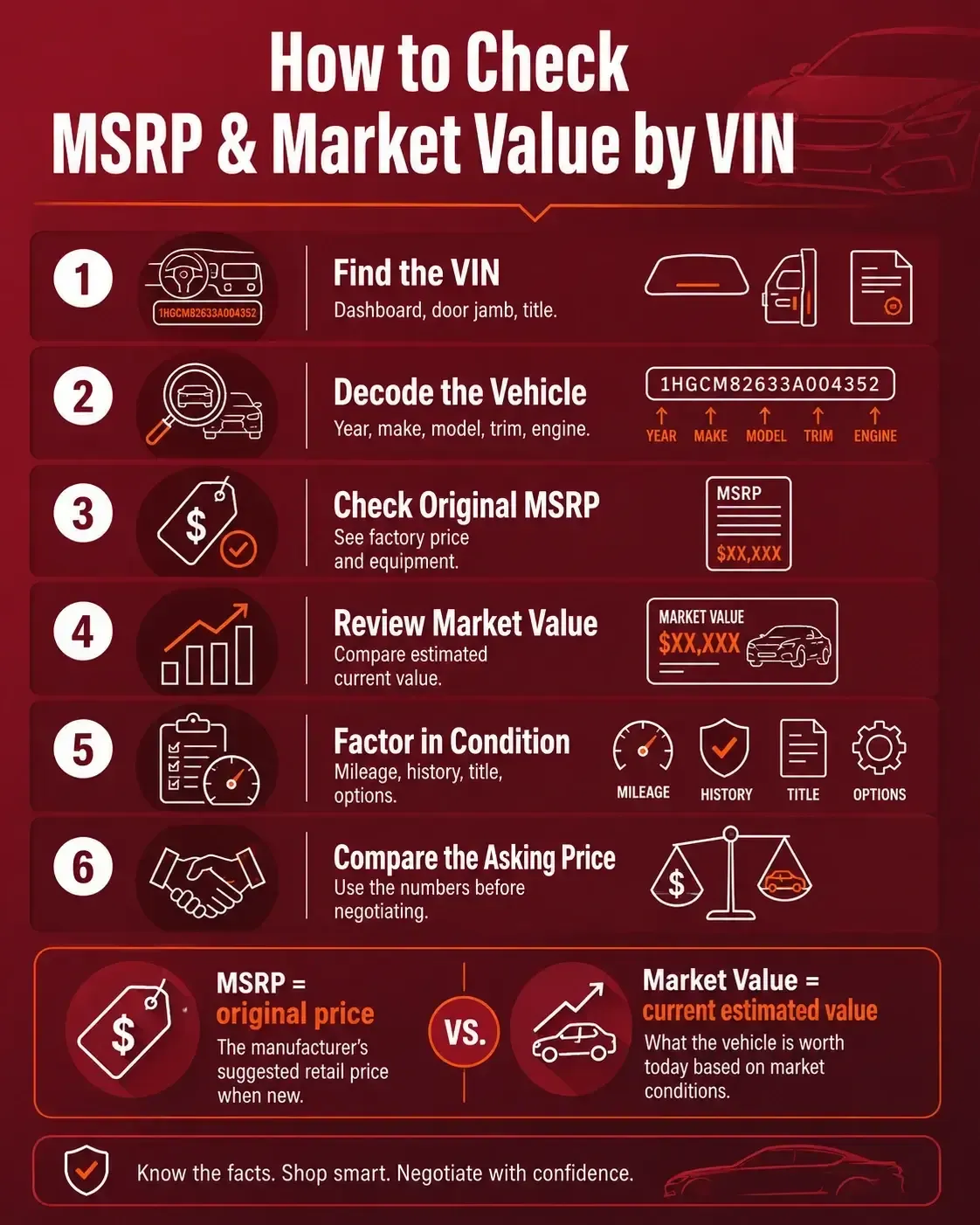
How to Check Original MSRP by VIN Number?
If you want to know how to check original msrp by vin number, start with the VIN itself. It sounds basic, but it matters. One copied character can point you toward the wrong vehicle.
1
Confirm the VIN First
Check the dashboard, driver-side door jamb, title, registration, or insurance documents. The VIN should match across the vehicle and paperwork.
2
Decode the Vehicle Details
Use a VIN decoder to identify the year, make, model, trim, engine, drivetrain, and body style. These details can affect original pricing.
3
Review Available MSRP Data
Some VIN tools can show original MSRP when the data is available. This can help you compare trims and factory configurations.
4
Compare the Factory Equipment
MSRP is tied to how the car was built. Packages, wheels, paint, interior options, and technology features can all move the original price.
5
Check the Window Sticker if Needed
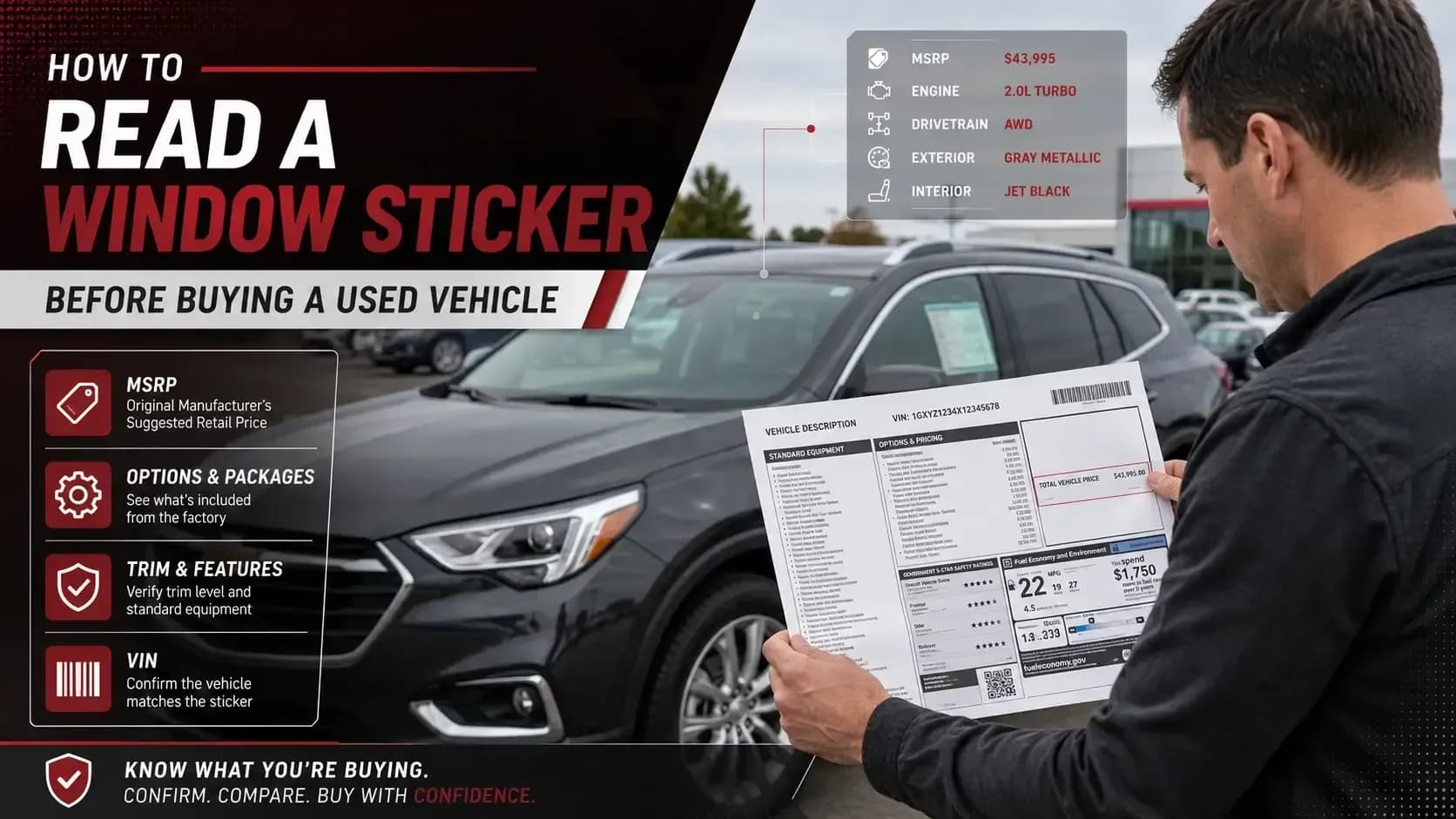
If you need deeper factory pricing detail, the original window sticker can show MSRP, standard features, optional equipment, destination charges, and packages.
6
Treat MSRP as Context
Original MSRP is not today’s value. It is a useful starting point, not the final answer.
If you are not sure how to read those details, this guide on how to read a window sticker can help you understand the pricing lines more clearly.
How to Find Car Market Value With VIN?
Now let’s talk about current value. This is the number most buyers care about when money is about to change hands.
A vehicle value lookup by vin can help estimate what the car may be worth based on decoded vehicle details and market signals. The number can still vary because condition, mileage, location, title history, and demand all matter.
1
Start With the Correct Vehicle
Market value only helps when the vehicle is identified correctly. Trim, engine, drivetrain, and body style can change the estimate.
2
Check Mileage and Condition
Two cars with the same specs can still be priced differently if one has lower mileage, better maintenance, or cleaner cosmetics.
3
Compare Similar Listings
Look at vehicles with the same year, model, trim, drivetrain, mileage range, and condition. Do not compare a base model with a fully loaded one.
4
Review History and Title Status
A clean-title vehicle may carry a different value from one with accident records, mileage issues, or title brands.
5
Consider Local Demand
A 4WD truck may sell stronger in snow states. A fuel-efficient commuter may get more attention when fuel costs rise.
6
Treat the Estimate as a Range
An estimated car value by vin is a guide. The real sale price still depends on the car in front of you and the deal being made.
Can I See Original MSRP From VIN?
Yes, sometimes. Can I see original MSRP from VIN is a common question, and the honest answer is: it depends on the vehicle and the available data.
A VIN can identify the vehicle, but MSRP details usually come from connected factory, specification, or window sticker data. For some vehicles, the original MSRP is available in a VIN decode. For others, you may need a window sticker to see the full pricing picture.
What Can Change the True Market Value by VIN?
A true market value by vin is shaped by more than the badge on the hood. It depends on the vehicle’s identity and its real-world condition.
1. Mileage
Mileage affects value because it hints at use, wear, and future maintenance.
2. Condition
Clean paint, good tires, healthy interior, and no warning lights can support a stronger price.
3. Trim and Factory Options
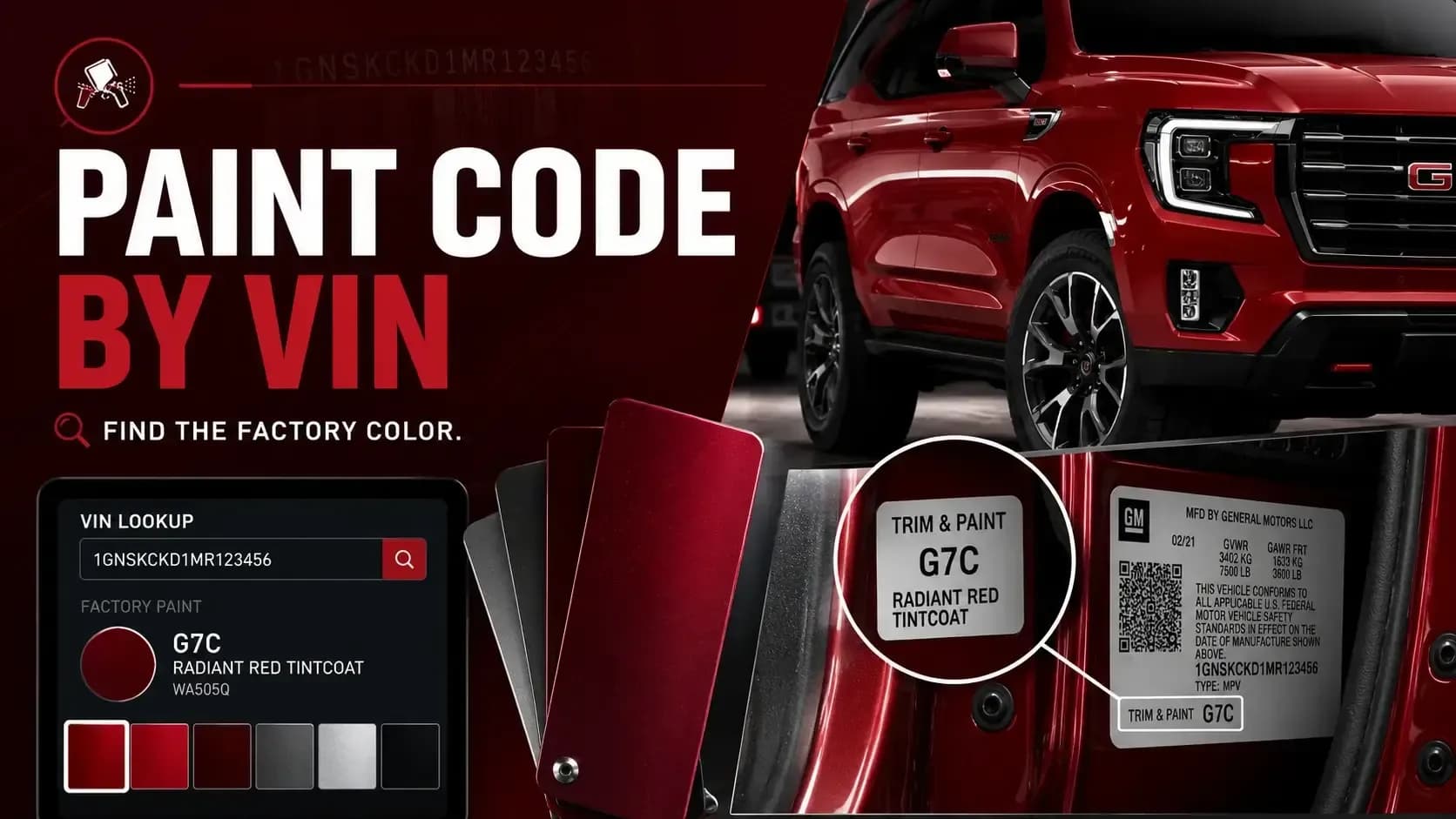
Higher trims and desirable packages can increase value, especially on trucks, SUVs, and enthusiast cars. If you need to understand how these details affect pricing, this guide on how to identify engine, trim, and drivetrain by VIN connects the specs to real buying decisions.
4. Title and Accident History
Salvage, rebuilt, flood, or accident records can reduce buyer confidence and lower value.
5. Local Demand
Some vehicles sell stronger in certain regions. Trucks, AWD SUVs, convertibles, and classics all have their own market rhythm.
6. Timing
Tax season, winter weather, fuel prices, interest rates, and inventory levels can all shift buyer behavior.
Price is never just math. It is math plus timing, condition, and a little bit of human mood.
How Buyers Can Use MSRP and Value Before Negotiating?
Negotiation feels easier when you understand the numbers. You do not have to be aggressive. You just need to be prepared.
1. Start With the VIN Decode
Confirm the year, make, model, trim, engine, drivetrain, MSRP, and estimated value when available.
2. Compare the Listing Price
See whether the asking price sits above, below, or near the estimated market value.
3. Check Vehicle History
If the price seems high, history matters. Accident records, title brands, and mileage issues can change the conversation.
4. Look at Real Condition
A clean report does not mean perfect condition. Inspect tires, brakes, paint, interior wear, fluids, and warning lights.
5. Use MSRP as Context
Original MSRP helps explain why the car may be worth more than a lower-trim version.
6. Use Market Value as Leverage
Estimated value gives you a fairer starting point for negotiation, especially when the seller’s price feels optimistic.
Before You Trust the Price
A used car price is more than a number in a listing. It is a mix of original price, current demand, condition, mileage, history, and seller expectations.
That is why checking MSRP and estimated value by VIN is useful. It gives you a clearer starting point before you get pulled in by clean photos or a confident sales pitch.
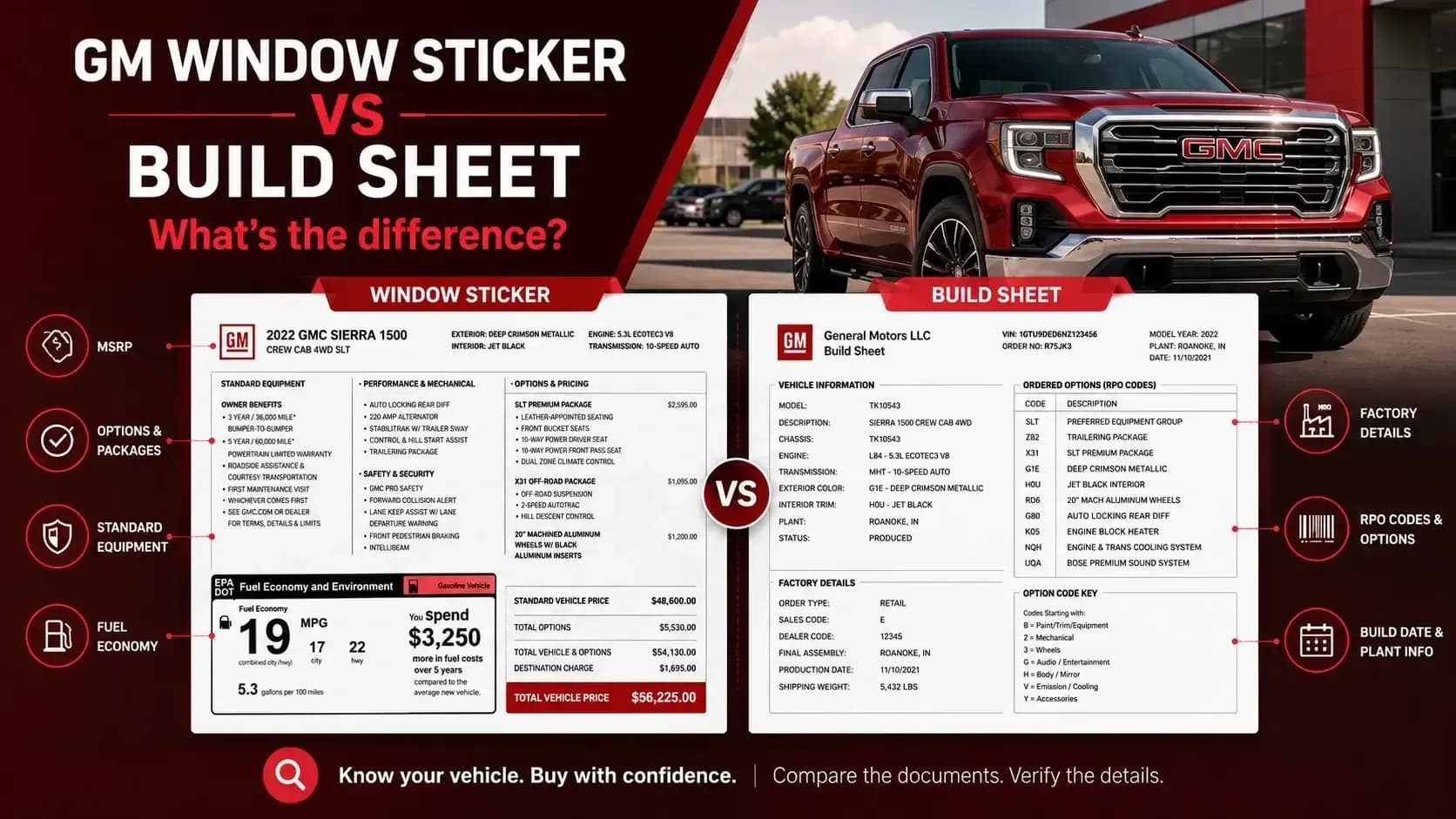
For a GM vehicle, a GM window sticker can help you review original factory pricing, installed equipment, packages, and MSRP details. Use that information with the vehicle’s condition, history, and current market value before making your next move.
Frequently Asked Questions
What is an MSRP lookup by VIN?
An msrp lookup by vin helps identify the vehicle’s original manufacturer suggested retail price when that data is available.
What is a VIN lookup for MSRP and resale value?
A VIN lookup for MSRP and resale value helps you compare what the vehicle cost when new with what it may be worth today. It is useful when you want to understand pricing, trim differences, and resale value before buying or selling.
Can I check car value by VIN?
Yes. A check car value by vin can give you a value estimate based on the vehicle’s identity, mileage, trim, equipment, and market data when available. It is a guide, not a promise that the car will sell for that exact number.
Is original MSRP the same as market value?
No. Original MSRP is the suggested price when the vehicle was new. Market value is closer to what the vehicle may be worth now, based on condition, mileage, demand, and records.
Can I see original MSRP from VIN?
Sometimes. If the data is available, the VIN may help show original MSRP. For full factory pricing details, a window sticker may be needed.
How do I find car market value with VIN?
Use a VIN-based value lookup, confirm the vehicle specs, compare similar listings, check mileage and condition, and review any title or accident history before trusting the number.
Why is estimated market value different from the listing price?
The listing price is the seller’s asking number. Estimated market value is a guide based on vehicle and market data. Condition, location, demand, upgrades, and negotiation room can all create a gap.
Does a VIN show all factory options?
Not always. A VIN can show important vehicle details, but a full list of factory options may require a window sticker, build sheet, or options report.
Should I use MSRP when negotiating a used car?
Yes, but use it as context. MSRP helps explain the vehicle’s original price position, while current market value is usually more important for negotiation.