A modern VIN is neat, long, and predictable. A classic VIN? Not always.
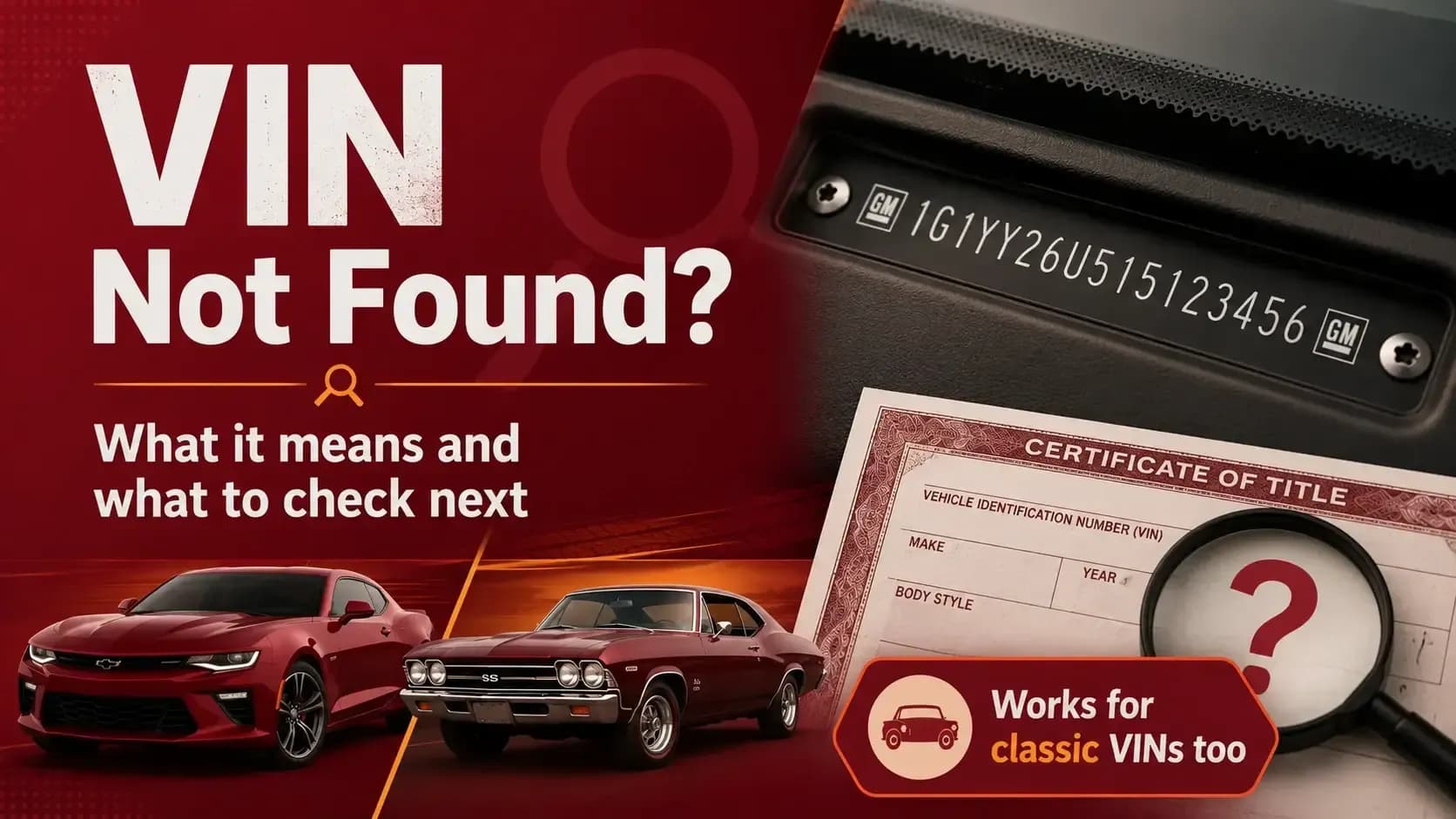
If you are trying a classic car VIN lookup and the result says invalid, missing, or not found, the car may still be real. Many older VINs were built before today’s 17-character format became standard, so you need a different way to decode old VIN numbers.
Key takeaways:
- Older VINs can be shorter than 17 characters and still be real.
- Pre-1981 VINs varied by brand, year, plant, and vehicle line.
- Classic vehicles should be checked with VIN data, paperwork, tags, factory documents, and inspection together.
If you are checking an older GM vehicle, try the GM VIN decoder. It can help with classic GM VINs when many standard lookup tools return little or nothing.
Why Older VINs Feel Confusing
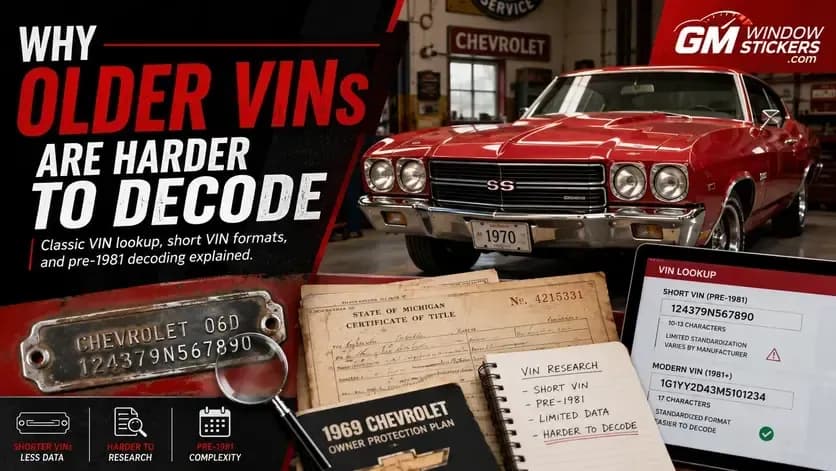
Older VINs feel confusing because they were created under a different system. Before the 1981 model year standard, automakers had more freedom in how they structured vehicle identification numbers.
That is why understanding VIN history before 1981 standardization matters. A 1960s or 1970s GM VIN may look too short to a modern decoder, but that does not mean it is fake.
The VIN May Be Shorter
Some older vehicles used 13 digits, 12 digits, 11 digits, or other shorter formats. That can trigger an error in tools built only for modern VINs.
The Format Was Not Universal
Different manufacturers used different systems. Even within GM, structure could vary by brand, year, and model line.
The Same Position Could Mean Different Things
A character that points to body style in one era may not work the same way for another vehicle line.
Digital Records Can Be Thin
Many classic cars were sold, titled, repaired, and restored long before vehicle data moved online.
Tags and Paperwork May Tell Different Parts of the Story
The VIN may confirm identity, while trim tags, build records, or old paperwork may explain paint, interior, options, or assembly details.
Modern Systems May Reject Real VINs
A valid old VIN can still return an invalid message if the tool expects exactly 17 characters.
Modern VIN vs Classic VIN: Same Purpose, Different Rules
The difference between modern VIN and classic VIN is not just length. It is also consistent.
Modern VINs follow a more predictable structure. Classic VINs are more like old shop manuals: useful, but you need to know which year and model you are reading.
Modern VINs Are Usually 17 Characters
That format became the common standard for vehicles from the 1981 model year onward.
Classic VINs Can Be Shorter
This is why people ask, why is my VIN only 13 digits? On many older cars, that can be completely normal.
Modern VINs Include a Check Digit
The check digit helps validate modern VINs. Older VINs may not use that same validation method.
Classic VINs Need Brand-Specific Knowledge
A classic GM VIN often needs GM-specific decoding, not a generic modern VIN reader.
Newer Records Are Easier to Connect
Modern vehicles usually have stronger digital records, while classics may rely more on paper documents.
Older Vehicles May Have Been Changed
A classic car may have a different engine, interior, wheels, or trim than it had when new.
Why Are Older VINs Harder to Decode?
So, why are older VINs harder to decode? Mostly because the old system was less uniform, and the supporting records are not always easy to find.
That does not make the VIN useless. It just means you have to slow down and verify it from more than one angle.
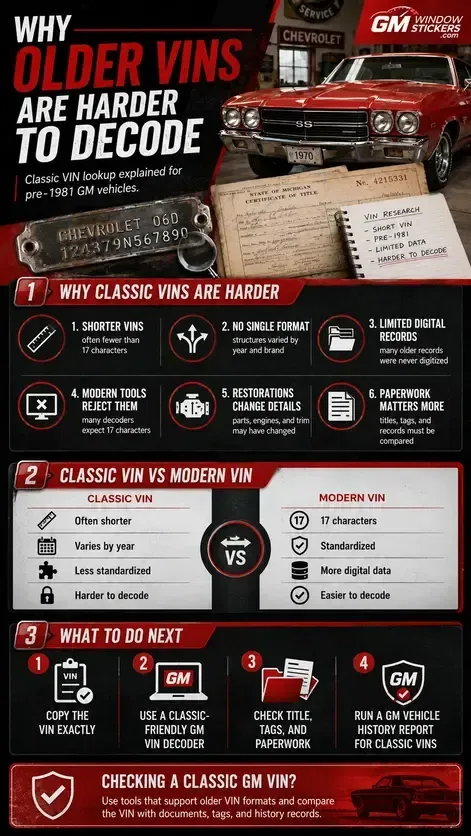
Short VINs Confuse Modern Lookup Tools
A short VIN number lookup may fail if the search tool only accepts 17-character VINs.
Pre-1981 Rules Were Not Fully Standardized
Before modern VIN rules, manufacturers had more flexibility. That makes decoding more dependent on year and brand.
Old Codes Need the Right Reference
Old VIN number meaning depends on the vehicle’s era. A code from one GM line may not apply to another.
Records May Be Missing
A classic car may have gaps in title history, ownership records, or factory documentation.
Restoration Can Blur the Details
After decades, parts may have been replaced, badges may have changed, and factory equipment may no longer match the car.
A “Not Found” Result Is Not Always Final
An invalid VIN message classic car result may only mean the tool cannot read that older format.
If your lookup keeps failing, this guide on why a VIN may not be found explains why a real VIN can still return no result.
How to Decode Pre-1981 VIN Numbers
If you want to know how to decode pre 1981 VIN numbers, treat the VIN like the first clue, not the whole answer.
A pre 1981 VIN decoder can help, especially when the vehicle has fewer than 17 characters. But you should still compare the result with the title, registration, tags, and the actual car.
1
Copy the VIN Exactly
Use the VIN plate, title, registration, or older paperwork. Do not add characters to make it fit a modern format.
2
Confirm the Model Year
The year matters because VIN patterns changed over time.
3
Use a Classic-Friendly Decoder
A regular modern decoder may reject the VIN. Use our GM VIN Decoder that can handle classic or pre-1981 formats.
4
Check the Make and Series
The decoded make, model, body style, or series should make sense for the car in front of you.
5
Compare Trim Tags or Body Plates
Some classic vehicles have additional tags that help confirm paint, interior, body style, or assembly clues.
6
Match the Paperwork
The VIN should match the title, registration, bill of sale, and any older documents you can find.
Why Does Carfax Say My Old VIN Is Invalid?
This one frustrates classic car buyers all the time: why does Carfax say my old VIN is invalid?
Often, the answer is simple. Many vehicle-history systems are built around modern 17-character VINs and digital record sources. If your car is older, the VIN may not fit the system’s rules, or the records may not be available in the database.
That does not automatically mean the vehicle is fake. It means you need other proof.
For classic GM vehicles, this is also where our classic-compatible GM VIN lookup can become useful. Some standard tools may stop at “invalid,” while a decoder that supports older GM formats can still help identify the vehicle.
How to Check Classic Car History Without a 17-Digit VIN
A vintage car VIN check is rarely one-click simple. Classic vehicles often have shorter VINs, older title records, missing digital data, or paperwork that was never built for modern lookup systems.
That does not mean you are stuck. It just means you need a history check that can work with older VIN formats.
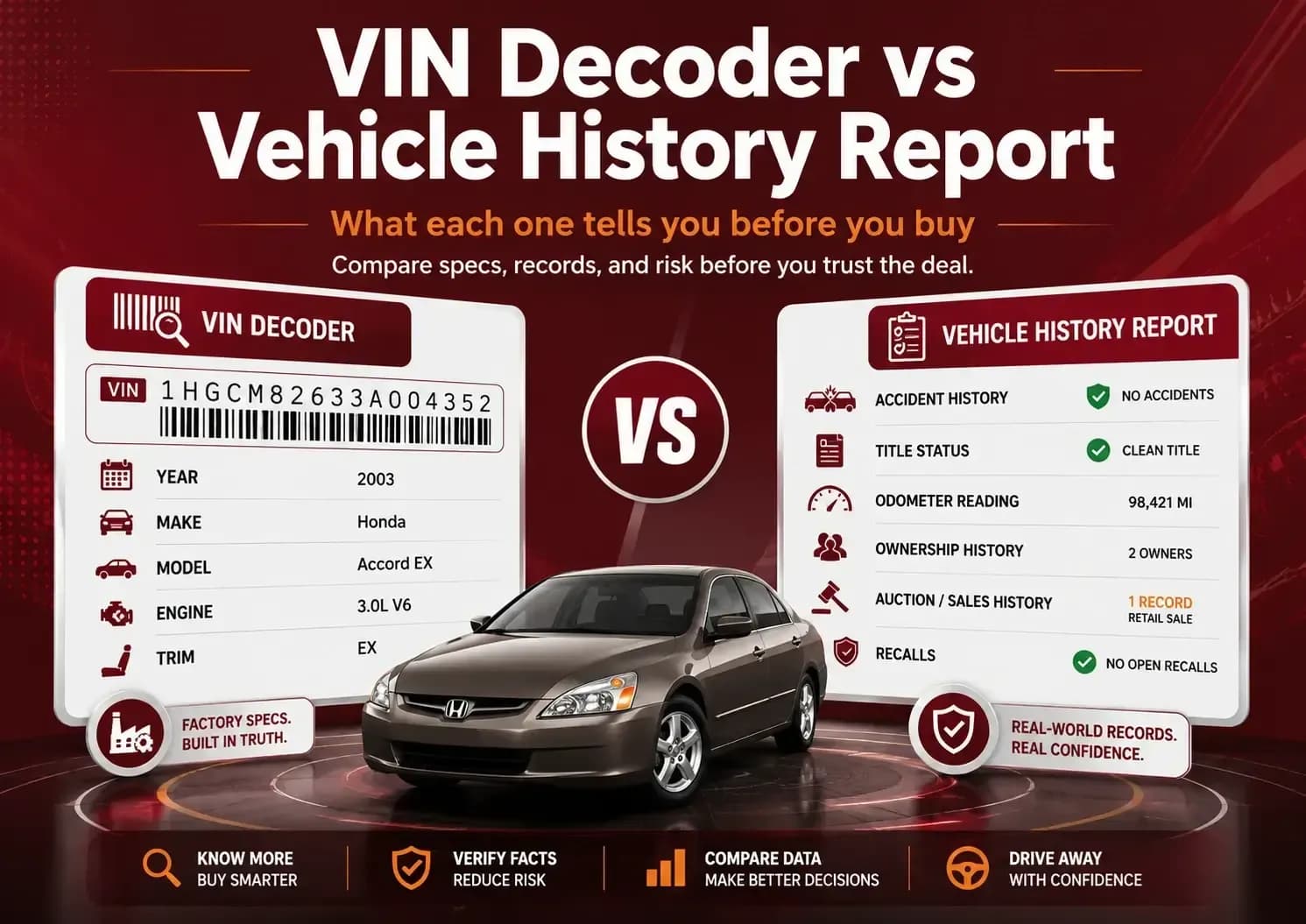
For classic GM vehicles, you can use a GM vehicle history report to help check records tied to a classic VIN, even when the VIN is shorter than today’s 17-character format. This is useful when standard tools reject the VIN or return little information.
1
Start With the Title
The title is one of the most important documents in any classic car purchase. Make sure the VIN on the title matches the vehicle.
2
Review Old Registrations
Past registration cards can help connect the VIN to previous ownership and state records.
3
Check Bills of Sale
Old sale documents may help support the ownership timeline, especially if the car moved between states.
4
Use a Classic GM History Report
A classic-friendly GM history report can help search available records even when the VIN is not a modern 17-digit VIN.
5
Compare Factory Details
Build sheets, trim tags, option records, or old dealer paperwork may support the car’s original identity.
6
Bring in a Specialist
For valuable GM classics, a professional inspection can help verify tags, body details, drivetrain, and paperwork.
Before You Give Up on an Old VIN
An older VIN can be stubborn. It may be short. It may not show up in modern databases. It may look strange if you are used to newer cars.
Still, that does not mean the car is automatically a problem.
Use a classic-friendly decoder. Check the title. Inspect the VIN plate. Compare tags, records, and factory documents. Ask direct questions. The goal is not only to decode the VIN; the goal is to verify the vehicle.
For older GM vehicles, a GM build sheet by VIN may help when you need deeper factory build details for buying, selling, flipping, or restoration.
Frequently Asked Questions
What is a classic car VIN lookup?
A classic car VIN lookup is a search designed to read older VIN formats, including shorter pre-1981 numbers that may not work in many modern 17-character VIN tools.
How do I decode old VIN numbers?
To decode old VIN numbers, copy the VIN exactly, confirm the model year, use a classic-friendly decoder, and compare the result with title records, tags, and factory documents.
Why are older VINs harder to decode?
Older VINs are harder because formats varied before modern standardization. Some are shorter, less uniform, and harder for modern databases to match.
Why is my VIN only 13 digits?
A 13-digit VIN can be normal on some older vehicles. Many classic cars were built before the modern 17-character VIN format became common.
How do I look up a VIN with less than 17 characters?
Use a short VIN number lookup or classic VIN tool that supports older formats. Do not add extra characters to force the number into a modern VIN field.
What is the difference between modern VIN and classic VIN?
A modern VIN is usually 17 characters and follows a more uniform structure. A classic VIN may be shorter and can vary by manufacturer, year, plant, and vehicle line.
Does a short VIN mean the car is fake?
No. A short VIN can be normal for older vehicles. It becomes concerning when the physical VIN, title, registration, and seller story do not match.